News
2026-09-24
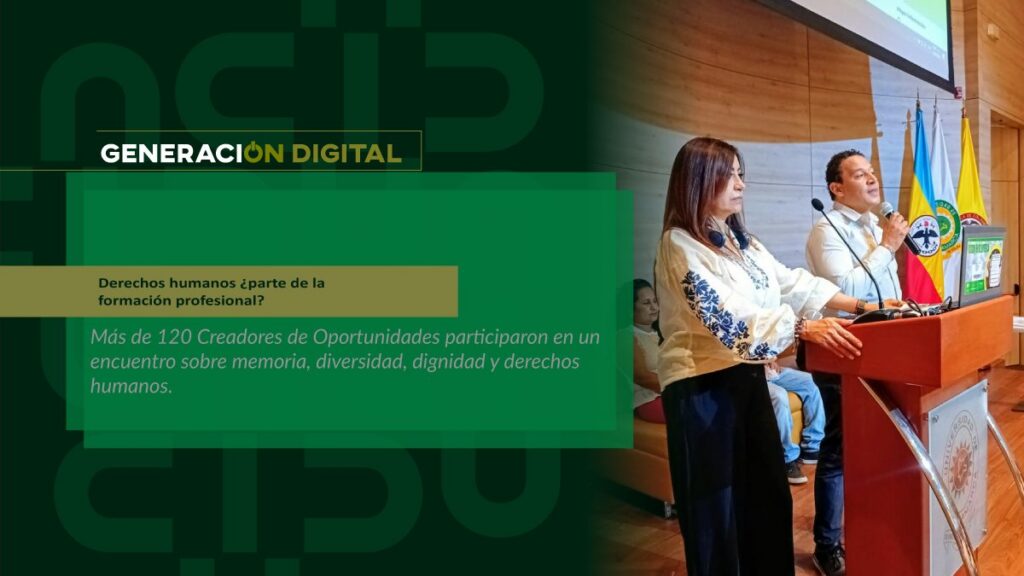
Human rights: part of professional training?
By: Alejandro García Suárez – Advisory Office of Communications



I am your virtual assistant, here to help you quickly and easily.
▲ Back to Top

This debate is not new and has always highlighted the gap between the university/academia and the productive sector and communities. From this debate arises the following question: What contributions do we expect from future university graduates to society?
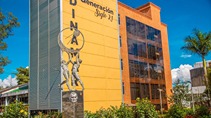
In this sense, the University of Cundinamarca is clearly committed to education for life, democratic values, civic responsibility, and freedom, which are fundamental and universal human rights and responsibilities. These values must permeate the entire structure, from the macro to the micro level, generating a curriculum supported by the Transmodern Digital Educational Model – MEDIT (Muñoz Barrera, 2019).
Transmodernity is defined as an assumption and positioning towards human realities, which does not only want to remain a theoretical postulate, but has a clear applied orientation towards the transformation and overcoming of paradigms to give meaningful answers to translocal problems, understanding this last concept as the learning developed in local areas and connected with the global realities of our world, learning that is developed through these areas with a clear mediation of the digital.
Furthermore, this digital aspect is geared towards a way of being and existing, as well as relating to this global context. It is not the end of pedagogical mediation, but rather a series of opportunities to bring excellence to our students and, consequently, to our graduates.
So how do these ideas translate into the daily lives of our teachers and students? Through the organization of diverse Learning Fields, which aim to move beyond traditional subject and course models, establishing themselves as ecosystems of dialogic learning where not only the classroom is integrated, but also other dimensions such as family, society, culture, the institution, the individual, and nature. All of this is designed to offer a series of meaningful experiences that foster a shift in the student's role, transforming them into an active and transformative subject.
Therefore, educational practice cannot be based solely on theoretical and lecture-based mediations; it must strive for evidence, as in any scientific field, that demonstrates and recognizes relevant learning in the student that is articulated with the professional profile of the program and that, in turn, generates profound changes in the student's vision of life as a transhuman being.
REFERENCES
Muñoz Barrera, A. (2019). Transmodern Digital Educational Model - MEDIT-. In https://www.ucundinamarca.edu.co/index.php/modelo-educativo-digital-transmoderno
FRANCISCO CONEJO CARRASCO
MSc.
Coordinator (e) School of Teacher Training and Learning – EFADS21.
News
News
News
News