News
2026-09-24
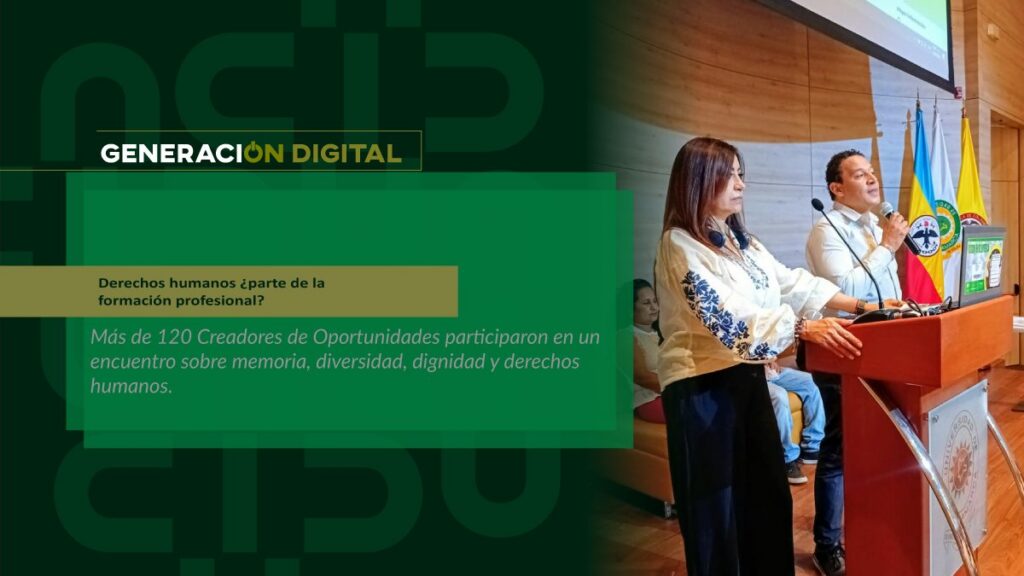
Human rights: part of professional training?
By: Alejandro García Suárez – Advisory Office of Communications


I am your virtual assistant, here to help you quickly and easily.
▲ Back to Top
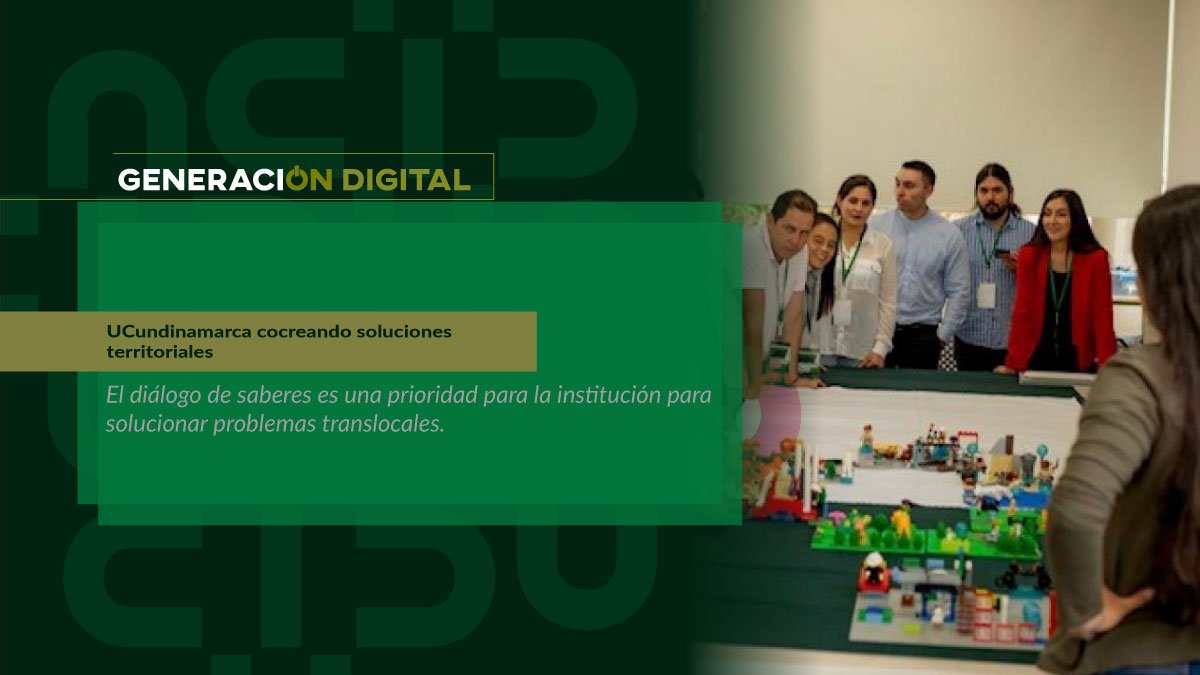
Solutions generated collaboratively among the participating agents from communities affected by problems in the territories are the result of the Social Innovation Laboratory (LIS) initiative, led by the University of Cundinamarca.
The impact of UCundinamarca through Social Interaction processes in the seven municipalities where it has a presence (Girardot, Fusagasugá, Facatativá, Soacha, Chía, Zipaquirá, and Ubaté) is strengthened by this new institutional initiative, which seeks to co-create solutions to the most pressing problems of the communities in these territories through the application of innovative methodologies.
The framework of this living lab is the Learning Field Methodology – LFM, a pillar of the Transmodern Digital Educational Model – Medit, an educational proposal for life, democratic values, and civility, proposed by the University's president, Adriano Muñoz Barrera.
During the LIS launch scenario, the Academic Vice Rector, Víctor Londoño, explained that “The University cannot remain with its back to the community, or simply thought of as a cloister dedicated to transferring knowledge”; two years ago, in the midst of the pandemic, together with the National Consulting Center, we applied a series of instruments to find out from the voices of the community agents what those problems are that are latent in the territory, thus forming the Bank of Translocal Problems, the primary source that mobilizes the Laboratory.
The Social Innovation Laboratory is led by the Directorate of University Social Interaction – ISU and will gradually coordinate its management with the communities, also involving the Directorate of Science, Technology and Innovation – CTeI, under the premise of generating solutions from and for the territories.
The Laboratory is a reality
On November 24, the University Social Interaction Directorate convened the environmental authorities of Fusagasugá, environmental organizations, schools in the municipality, entities such as the Public Services Company of Fusagasugá – Emserfusa, the Route 40 Road Consortium and the Regional Autonomous Corporation – CAR, as well as graduates, students, professors and directors of the Institution to solve the first problem of the Social Innovation Laboratory: “The inadequate disposal of waste (garbage) in the municipality of Fusagasugá”.
“The organizations and citizens who responded to the call, our pioneering LIS, showed a willingness to find a solution and an appropriation of the initiative, which allowed us to demonstrate that, in itself, a space like this laboratory was a necessity in the province of Sumapaz.
”This exercise will be replicated in Girardot, Soacha, Chía, Facatativá, Zipaquirá and Ubaté,” explained Patricia Gil, director of University Social Interaction.
The official also stated that an internal call will be made to professors and undergraduate and postgraduate students, as well as to the external community of the aforementioned territories, to participate in the updating of the translocal problem banks.
Other social projects and initiatives
During 2023, the University Social Interaction Directorate consolidated alliances that allowed it to get closer to the community to provide it with more opportunities.
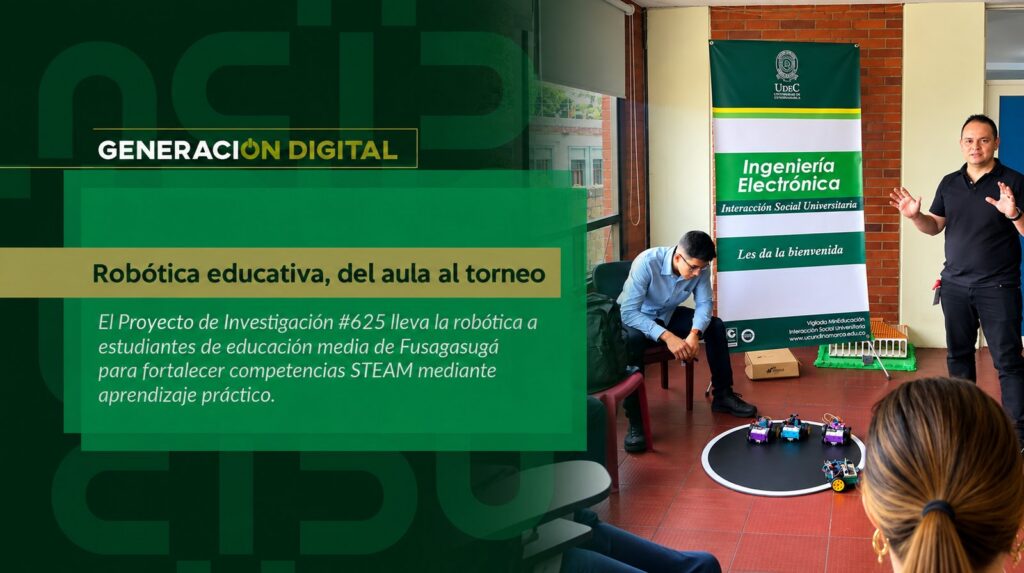
In the municipality of Soacha, for example, the mathematics olympiads were held, benefiting 813 participating children and adolescents from public schools in the municipality; likewise, robotics workshops were held for 320 students from schools and the transition to higher education project in which 230 students from ninth, tenth and eleventh grades, belonging to three educational institutions in the municipality, began their immersion process in university life, with the University of Cundinamarca.
Through various social projects implemented by knowledge and learning managers (teachers) in the seven municipalities, the community was impacted through free training processes, mentoring, support for small businesses, technology transfer, among others.
A diverse continuing education program already in tune with the needs of the region, as well as a team of 208 active volunteers throughout 2023, committed to social and environmental causes, demonstrate part of the university's social management.
According to Patricia Gil, Director of Social Interaction, with the Social Innovation Laboratory, the University hopes to unite different social forces to contribute to the territories, through socially responsible and sustainable solutions, derived from the dialogue of knowledge and consolidated through community commitment and action.
Source: The Weather
News
News
News
News