News
2026-09-24
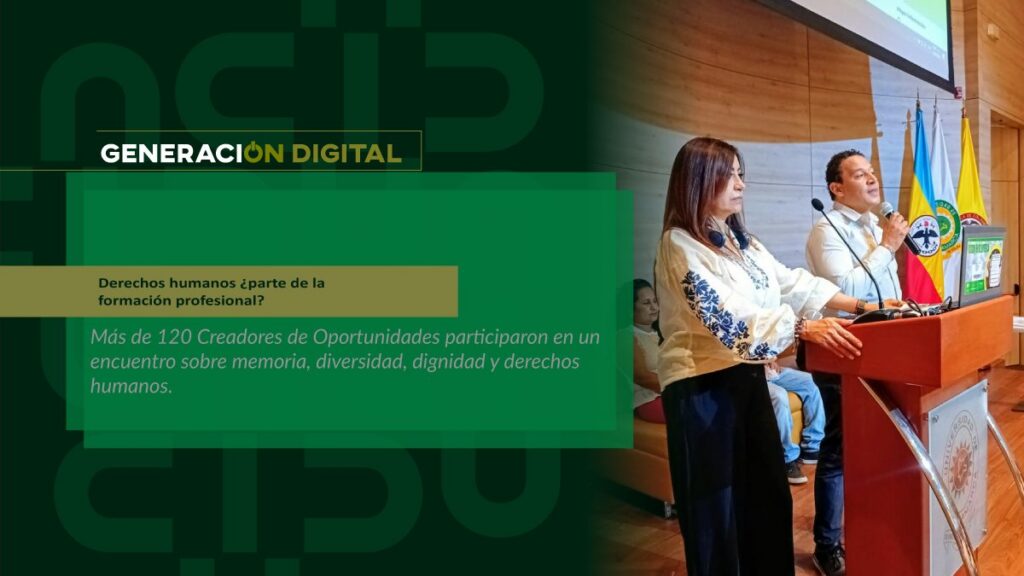
Human rights: part of professional training?
By: Alejandro García Suárez – Advisory Office of Communications



I am your virtual assistant, here to help you quickly and easily.
▲ Back to Top

The Colombian Institute of Technical Standards (Icontec) awarded the University of Cundinamarca the certification of the Integrated Quality Management System (SIG) under the ISO standard 9001:2015.
The University of Cundinamarca received certification for its Quality Management System in the ISO 9001:2015 standard by the Colombian Institute of Technical Standards (Icontec) which highlights the quality of the educational service provided by the Institution.
This certification awarded by Icontec is the result of the work, dedication and commitment of the leaders of each area and the rest of the institutional community that supports the different processes of the Integrated Management System, in addition to maintaining high standards of quality and the constant search for continuous improvement.
“It is an honor to be here presenting this certificate, a document that recognizes your time and effort, and demonstrates how each of you has contributed to the quality process to improve the University and the services you provide. This certification guarantees the country a quality educational service.”, Claudia Pérez, Regional Director of Icontec, stated.
The certification presented to the rector of UCundinamarca, Adriano Muñoz Barrera, highlights: Design and provision of teaching, research, and university extension services for undergraduate and graduate programs in the face-to-face modality of the faculties of Administrative, Economic and Accounting Sciences, Agricultural Sciences, Sports Sciences and Physical Education, Engineering, Health Sciences, Social Sciences, Humanities and Political Science, and Education in the Fusagasugá headquarters, Ubaté and Girardot branches, and extensions in Soacha, Facatativá, Chía, and Zipaquirá”.
The importance of this ISO 9001:2015 certification lies in its consolidation of the University's mission and its strengthening of its institutional image. It also highlights the institution's ongoing efforts to build trust among stakeholders regarding its various processes. Furthermore, it promotes sound administrative practices to improve the services offered to the university community and contributes to increased productivity and efficiency, while simultaneously reducing errors, accidents, rework, and returns.
The certification is extended for another year, when the certifying body will again review the applicability of the NTC ISO 9001:2015 standard in the University's processes.
Based on the results presented in the external audit report, the following aspects will be taken into account:
It is worth noting that the University has been working on continuous improvement through compliance with requirements defined in good administrative practices that support its daily work, resulting in the quality of processes and integration of the management models that are being implemented at the University, such as the Environmental Model, the Occupational Health and Safety System and the Information Security Management System.
Similarly, joint work is being done to align the Quality Management model with Program Accreditation and Institutional Accreditation, in addition to optimizing processes that require greater operational efficiency to achieve the institutional objectives of the Generation.
News
News
News
News