News
2026-09-24
Human rights: part of professional training?
By: Alejandro García Suárez – Advisory Office of Communications



I am your virtual assistant, here to help you quickly and easily.
▲ Back to Top
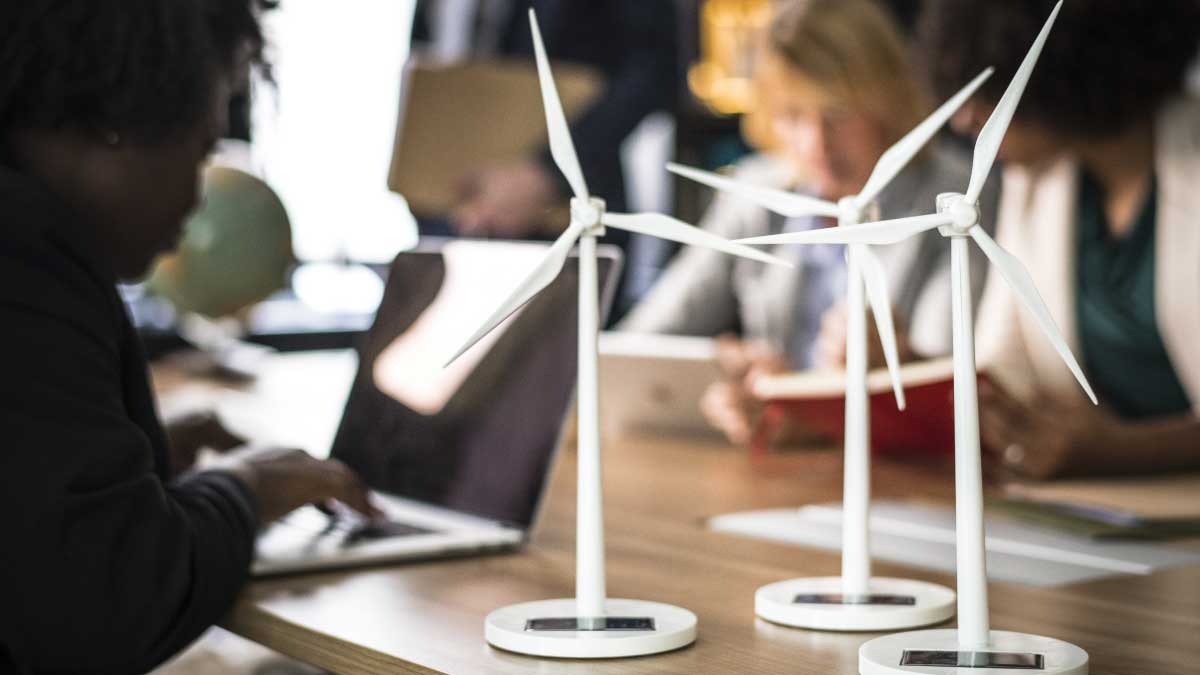
Professors Eric Osorio, Diego Hernández-Contreras, Diana Duque, Daniel Acosta and Yaneth Rodríguez, members of the university social interaction group of the Agronomic Engineering program of the University of Cundinamarca, led the organization of the III Climate Change Forum together with the teacher, Laura Gualdrón, of the National Open and Distance University.
The experts and guests had the opportunity to share information about the effects that climate change has generated in the world, and how plants and crops have adapted to the changes that have often been caused by humans.
Grazing and greenhouse gas emissions
Guilhermo FS Congo, PhD in animal science and pasture from the University of São Paulo, participated in the event with the presentation: Grazing management as a strategy to increase productivity and mitigate greenhouse gas emissions in pastoral systems.
For him, there are two important aspects to this issue: extensive areas and productivity. Regarding the first, it's necessary to discuss the current production scenario in Latin America, where there are very large areas; for example, in Colombia there are approximately 7 million hectares that could support 26 million head of cattle.
To mitigate the damage caused by greenhouse gases, it is necessary to consider:
– Grazing management should be done with defined goals in terms of the structural characteristics of the pasture.
– Always harvest the forage produced very well, regardless of the quantity; that is, focus primarily on the utilization stage.
-Consider investment in the growth stages (fertilization, irrigation) and conversion (genetic merit, supplementation).
Aspects of the impact of climate change on tropical fruit trees
One of the guests at the forum was Gerhard Fischer, professor in the Agronomy department of the Faculty of Agricultural Sciences at the National University of Colombia.
In their presentation, they learned about the changes that climate change is currently causing in plants and crops.
The United Nations Framework Convention on Climate Change defines it in its Article No. 1 as a change of climate attributed directly or indirectly to human activity that alters the composition of the global atmosphere and that is in addition to natural climate variability observed over comparable time periods.
Scientists have found evidence that the planet's climate is changing at a faster rate than expected and that activities related to production, extraction, settlement, and consumption are the main cause of climate acceleration.
Effect of temperature
Global warming has caused temperature changes that affect plants, so it is necessary to determine their physical state, seasonal fluctuations, and day/night temperatures.
Likewise, heat and cold stress causes loss of semipermeability (modifying microviscosity and fluidity of membranes) and extreme temperatures reduce the rate of growth, photosynthesis and respiration.
On the other hand, high temperatures could affect the formation and functionality of pollen, reduce the number and size of fruits and seeds, affect the speed of physiological processes due to the increase in the kinetic energy of enzymatic systems; and there would be flatter and shorter fruits.
Conclusions on climate change and plants
* Many ecophysiological studies are lacking in open fields, greenhouses, growth chambers, and phytotrons for crops, in which climatic factors are modified simultaneously.
* Have portable equipment to measure growth, physiology, and stress directly on-site.
* Obtain and maintain a large genetic bank of varieties and accessions in each species to perform “broad screening” according to the type of climatic stress.
* Having distinct seasons in many locations and crops.
* Develop and implement more projects on the effect of climate change on our crops, including CO2.
* Investigate new cultivation systems (shorter, different pruning and trellising, or intercropped with other species).
* Observe how the farmer copes with these climate changes and how he can be trained.
* Further study of the post-harvest quality of fruit from stressed sites.
The most important conclusion of the study and the current environmental problems is to thank all the farmers, teachers, advisors, and students who are working to alleviate the stress caused by climate change in crops.
News
News
News
News