News
2026-09-24
Human rights: part of professional training?
By: Alejandro García Suárez – Advisory Office of Communications


I am your virtual assistant, here to help you quickly and easily.
▲ Back to Top
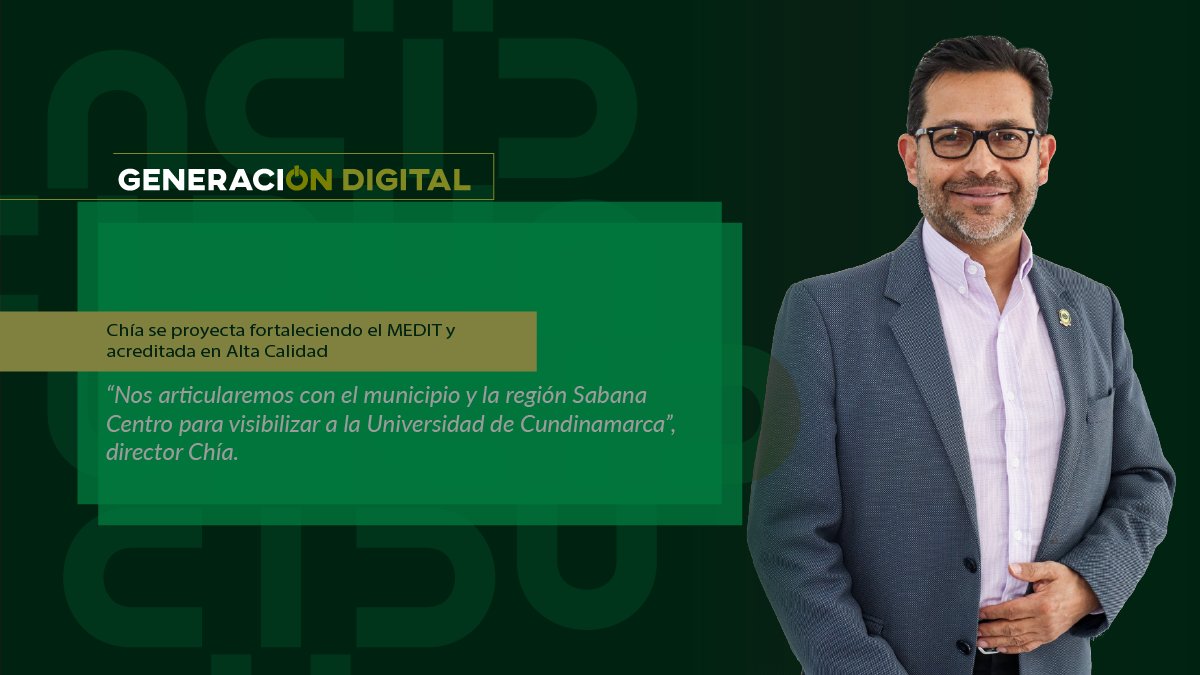
In an interview with the University of Cundinamarca News Agency (ANUC), Carlos Trujillo, administrative director of the Chía extension, shared the plans, objectives, and challenges that the extension will face during the first semester of 2025. He also addressed the importance of the Transmodern Digital Educational Model (MEDIT) and its application at the institution.
Cundinamarca University News Agency (ANUC): What are the main plans and objectives of the Chía Extension for this semester?
Carlos Trujillo (CT)We have an ambitious and transformative educational project. Among our main plans, we seek to position and promote the extension program's portfolio in the municipality and the region. In addition, we will implement digital badges to recognize those who contribute to academic and municipal development. We will work towards High-Quality Accreditation, a medium- and long-term goal. We will also strengthen training and academic processes to guarantee effective learning environments. We will collaborate with the municipality and the Sabana Centro region to raise the profile of the University of Cundinamarca in the area.
ANUC: How do these plans align with the Transmodern Digital Educational Model (MEDIT)?
Carlos Trujillo (CT)Our educational model is based on transhuman, translocal, and transmodern dimensions. These dimensions allow the university to differentiate itself and transcend in academic and professional training. The Chía extension integrates this model, connecting academia with families, society, and the productive sector. In this way, we promote regional growth and strengthening through the talent of our students and graduates.
ANUC: What are the main challenges facing the Chía extension during this period?
Carlos Trujillo (CT)A key challenge is budget execution; it is essential to ensure that the Action Plan is developed with an efficient and well-coordinated methodology. Optimizing the operating budget is a priority for the first semester. Another challenge is strengthening the infrastructure and academic spaces. Maintaining facilities and laboratories in optimal condition is vital for the stability and well-being of our community. We also seek to consolidate a healthy and welcoming work environment at the extension campus.
Featured Projects for the First Semester
ANUC: What notable projects are underway or planned for the next semester?
Carlos Trujillo (CT)We want the Chía extension to achieve High Quality Accreditation. This process is part of the University of Cundinamarca's 55th anniversary celebration, and we are planning events to strengthen our reputation and recognition in higher education. Starting in March, we will implement training programs on healthy habits for the university community. We will also promote initiatives to mitigate biomechanical risks at the institution. Additionally, as part of ExpoUCundinamarca, we will hold congresses, workshops, and conferences with business leaders and experts from the academic sector.
Strengthening the Bond with the Community of Chía
ANUC: Are there any initiatives or programs that seek to strengthen the link between outreach and the community of Chía?
Carlos Trujillo (CT)As part of the University's Strategic Plan, we are working to close the gaps in access to higher education. An agreement with the Municipality of Chía allows students from public schools to experience university life firsthand. We have also established agreements with municipalities in the Sabana region to offer postgraduate training programs. Within our cultural strategy, we will organize transmodern concerts to integrate academia with family, society, and the arts.
News
News
News
News