Fusagasugá Branch
2026-09-24
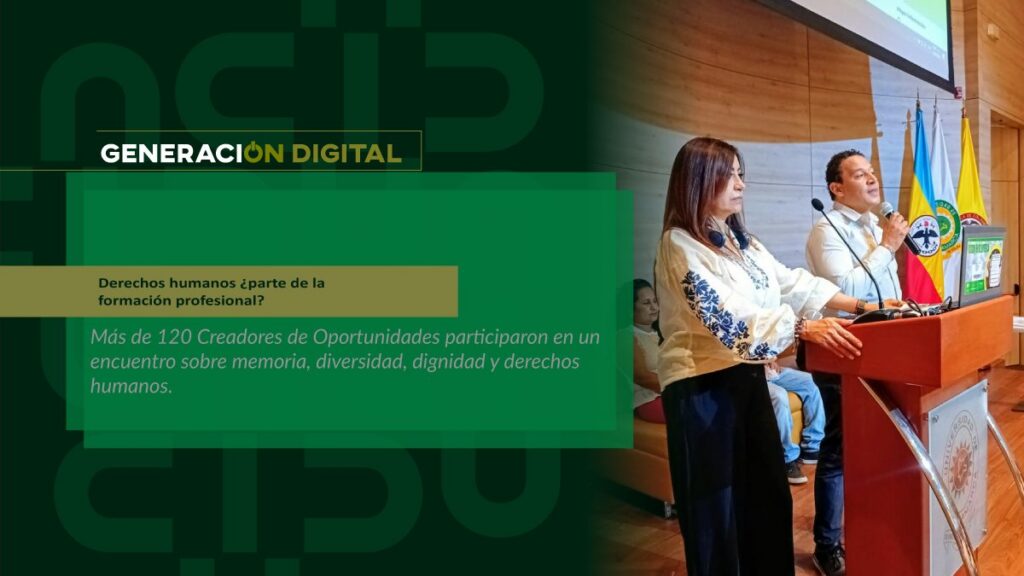
Human rights: part of professional training?
By: Alejandro García Suárez – Advisory Office of Communications


I am your virtual assistant, here to help you quickly and easily.
▲ Back to Top

By: Alejandro García Suárez – Advisory Office of Communications
The Agronomic Engineering program, in coordination with the Colombian School of Civil Aviators (ECDAC), conducted the Heavy UAS Pilot course, which covers application, spraying, and dispersion according to RAC 100 regulations, focusing on agricultural use. This training program meets the requirements established by the Civil Aeronautics Authority of Colombia, as per Colombian Aeronautical Regulation (RAC) 100, ensuring that participants operate drones under the highest technical and legal standards.
Jonathan Córdoba Fontecha, program coordinator at the Fusagasugá campus, highlighted that the Civil Aeronautics Authority has updated the regulations for drone operation. “We are strengthening the capabilities of our Knowledge and Learning Managers team and students, incorporating technologies for the agricultural and livestock sector,” he stated.
He added that the Faculty of Agricultural Sciences is seeking to implement a technological shift that will not only allow for the operation of drones, but also ensure strict compliance with current regulations. “The theoretical-practical course allows us to transfer this knowledge to students, including dispersion and spraying for agricultural use,” he pointed out.
Córdoba Fontecha explained that the use of drones for agricultural applications offers concrete benefits: “While manual fertilization per hectare takes between three and four hours with two operators, with a drone we achieve the same application in just four to six minutes. The technology not only speeds up the work, but also optimizes agricultural resources.”.
For Katheryne Blanco Osorio, a fifth-semester student, the experience was enriching: “At first it seemed difficult, but I managed to operate the drone without any problem. It is a very interesting tool that contributes to our training as agricultural engineers; it is dynamic and useful for our professional future.”.
This type of training reinforces the commitment of the University of Cundinamarca to innovation and the strengthening of the technical skills of its students, bringing them closer to tools that transform agriculture.
Under the Transmodern Digital Educational Model (MEDIT), UCundinamarca integrates technology and applied knowledge to train professionals capable of facing the challenges of the agricultural sector, promoting practical learning, technology transfer and positive impact on rural communities.
Listen to our Podcast:
News
News
News
News