News
2026-09-24
Human rights: part of professional training?
By: Alejandro García Suárez – Advisory Office of Communications



I am your virtual assistant, here to help you quickly and easily.
▲ Back to Top
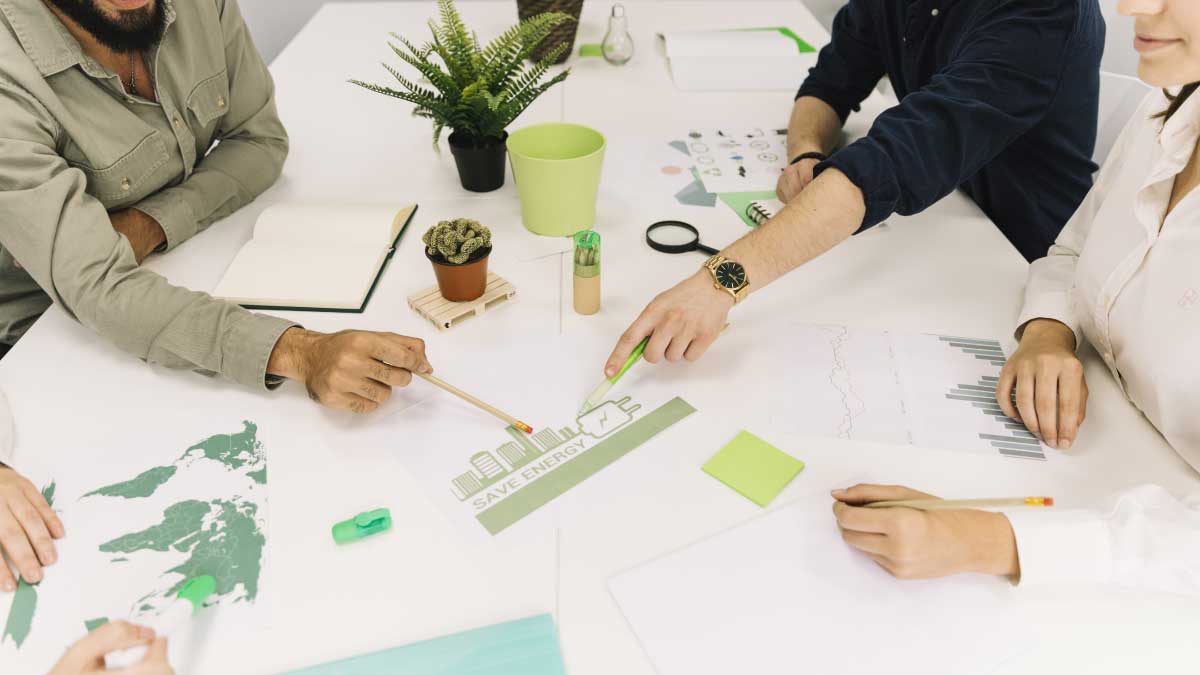
The academic event featured the release of the International Energy Agency's latest report, which projects that by the end of 2020 humanity could produce between 35 and 43 gigatons of CO2. This prospect requires generating transformation scenarios for the planet and the energy system to face the challenge of climate change and meet the Sustainable Development Goals set for 2030.
See the environmental engineering week here.,
Under the motto “on the road to a sustainable future””, The academy showcased potential solutions for managing and optimizing energy use, water management, materials management, environmental land management, and disseminating research on degraded soils under tropical dry forest ecosystems.
Dr. Lina María Aguirre Montoya, executive director of the Colombian Association for Sustainable Development and Industrial Ecology (ADSEI), presented scientific solutions to sustainability problems and the path forward for 2030 after the coronavirus.
“We need to prepare for 2030, analyze and update risks, review the entire supply chain, and have interconnected business continuity plans, as well as learn about best practices and success stories; we must also plan crisis scenarios, create maps up to the year 2050, motivate and train the human team for crises, and project contingency resources,” warned Aguirre Montoya.
In her presentation on industrial ecology and roadmaps, Dr. Lina María also urged environmental engineers to forge alliances for development toward green chemistry and a circular, local economy that promotes the sustainable use of local resources to improve the population's quality of life. The industrial ecology expert also explained how wind and solar energy have become inexpensive to produce.
Another topic addressed during the environmental engineering week was: “Disasters are not natural,” presented by Dr. Eduardo Vélez Soto, a specialist in disaster prevention, response and risk reduction, international humanitarian law, and defense and mobilization management.
Vélez Soto pointed out that vulnerability is the non-natural component of disasters, and vulnerability is the human aspect of disasters, due to not respecting the balance of nature, and the lack of planning in the territory makes human beings vulnerable.
“The lack of building codes and land use regulations, well-structured land-use plans can reduce vulnerability, environmental degradation increases the risk of zoonotic diseases, destruction of mangroves and ecosystems, vulnerability to disasters is the result of the decisions we make, another factor is disordered population growth, the lack of land-use planning increases vulnerability,” stressed Vélez Soto, the expert in disaster prevention, response and risk reduction.
The academic event included a webinar on knowledge transfer for the recovery of degraded soils in tropical dry forest ecosystems in Colombia and Mediterranean ecosystems in Spain, which highlighted the role of biochar as a sustainable soil amendment in the context of climate change. Biochar is a type of organic matter rich in aromatic carbon, produced from residual biomass under pyrolysis conditions.
The webinar shared the joint participation of Ucundinamarca, the Gran Colombiano Polytechnic, San Tomás University, the Institute of Agricultural Sciences of Madrid, the Institute of Agroecology of Seville, in the research of dry forest ecosystems of the two continents to generate strategies against climate change.
Poster Exhibition
Engineer Paola Rodríguez. Work: Evaluation of Biostimulation in the degradation of Total Petroleum Hydrocarbons (TPH) from sludge from a Service Station in the municipality of Girardot- Cundinamarca.
Student Karen Mojica. Work: Evaluation of the Ecosystem Service of Pollination by Native Bees in Coffee Crops in the Provinces of Tequendama and Sumapaz.
Student Carlos Reyes. Work: Analysis of endemic species in Colombia.
Student Manuela Zapata. Project: Impacts on the coral reef ecosystem in Colombia. Projects in the proposed modality are now complete.
Student Santiago Salinas. Work: Study of the adsorption of polluting metals (Cr, Ni, Cu) from the Bogotá River using cassava starch.
Student Ivonne Hernández. Work: Project “Separate at Home”: An alternative for the management of MSW in the La Esperanza neighborhood, sector I, Girardot (2020).
The 4th Environmental Engineering Week, on the path to a sustainable future, took place from October 13 to 16 and was experienced through our Facebook account @ucundinamarcaoficial, it featured the first environmental knowledge olympiads, film forum, cultural activities, presentation of research groups, environmental photography contest among other academic activities.
News
News
News
News