News
2026-09-24
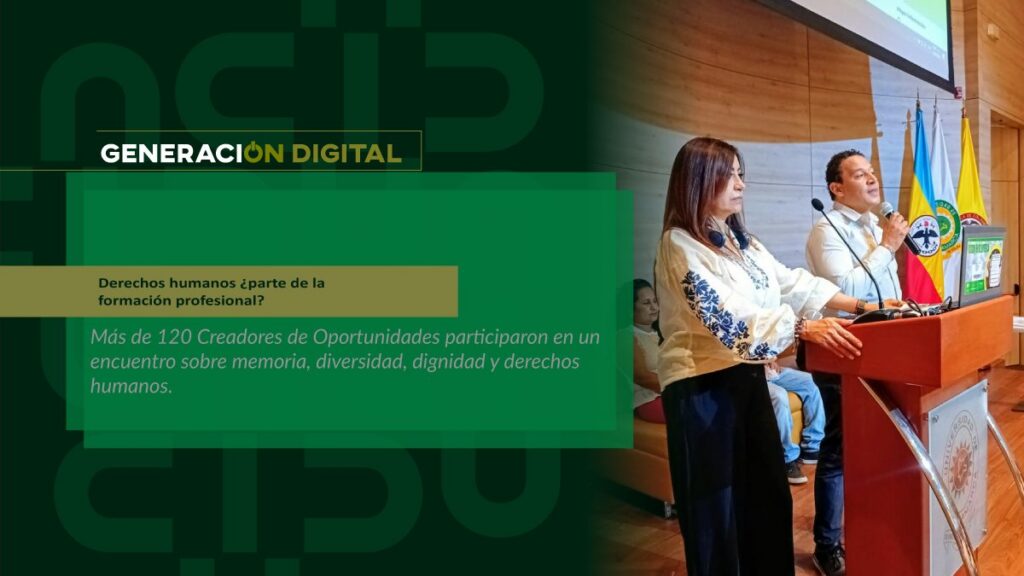
Human rights: part of professional training?
By: Alejandro García Suárez – Advisory Office of Communications



I am your virtual assistant, here to help you quickly and easily.
▲ Back to Top
By: Carolina Rojas – Advisory Office of Communications
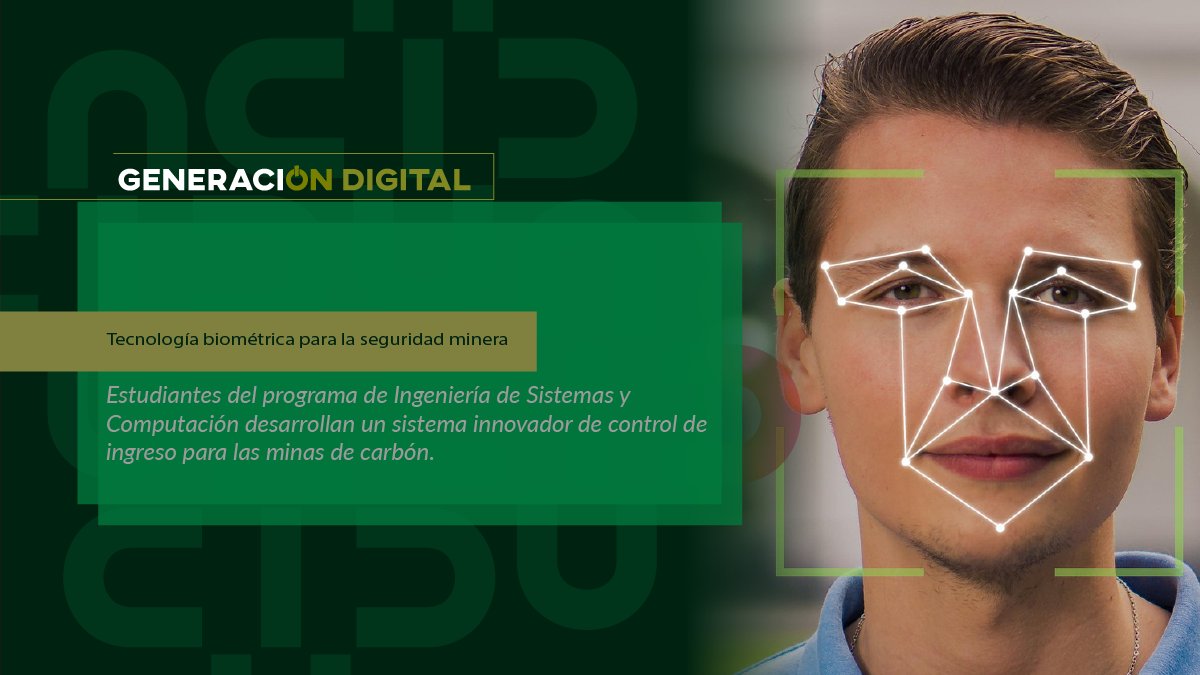
Fourth-semester Systems and Computer Engineering students Jhon Sebastián Murcia Romero and Maryuri Yinnet Salazar Espinel, from the Ubaté campus, are leading a project that aims to transform how access and security processes are managed at a mine in the department of Cundinamarca. Their proposal, called MINERSCAN, has been developed with a technological, social, and educational vision that addresses the needs of the community.
From a young age, Jhon was curious to understand the technological workings of the devices that surrounded his daily life. He recalls, “I always liked solving problems using logic. Entering this field allowed me to understand that Engineering is not just about programming, it's also about designing real solutions to optimize processes and improve people's lives.”.
Maryuri, for her part, shares her passion for technology and its wide range of applications, hence her inclination towards this training program. “I am motivated by knowing that I can use technology to solve complex real-world problems,” she says.
The Ubaté Province has a long-standing mining tradition, which is why this initiative arose from a request by the managers of the La Vidriosa mine, located in the Pueblo Viejo district of the municipality of Cucunubá, Cundinamarca. “They were looking for a definitive solution to optimize the registration of their workers' entry, since the manual process generated long lines, delays, and potential fraud,” the students explained.
In response to this need, the young people proposed MINERSCAN, a biometric registration system that integrates facial and fingerprint recognition to improve security and operational efficiency. Furthermore, the system includes an emergency response function for mine emergencies, allowing for rapid alerts to those in charge and the activation of rescue protocols.
The system directly addresses several current challenges in the mining sector: loss of physical records, unauthorized access, and vulnerabilities in worker identification. “Our goal is to offer a secure, efficient, and reliable tool that modernizes internal mine processes and protects those working in hazardous conditions,” said Salazar Espinel.
In the current phase of the project, the software and hardware functionalities necessary for its implementation are being defined using methodologies learned in the classrooms of UCundinamarca. “MINERSCAN began to take shape approximately a year and a half ago and is currently in the architecture design stage. We are working under the V-model, a methodology that includes design, programming, and testing,” the researchers stated.
Although the project has not yet been presented outside of university exhibitions, it has already been submitted to the 2nd Workshop "Classroom Events," which will take place on May 30th at the Pedagogical and Technological University of Colombia. It is also slated to participate in ALTENCOA 10 – 2025, the Meeting on Algebra, Number Theory, Combinatorics, and Applications, to be held in November at the University of Cartagena.
MINERSCAN is aligned with the principles of the Transmodern Digital Educational Model (MEDIT), having emerged as a response to a specific need within the community and aiming to generate a positive impact. The project involves multiple areas of knowledge: programming, electronics, interface design, and data analysis, making it an example of transdisciplinary and collaborative learning.
“MINERSCAN demonstrates how real solutions can be developed in the classroom that not only integrate cutting-edge technology, but also promote ethics, innovation and social commitment,” the project authors conclude.
News
News
News
News