Fusagasugá Branch
2026-09-24
Human rights: part of professional training?
By: Alejandro García Suárez – Advisory Office of Communications



I am your virtual assistant, here to help you quickly and easily.
▲ Back to Top
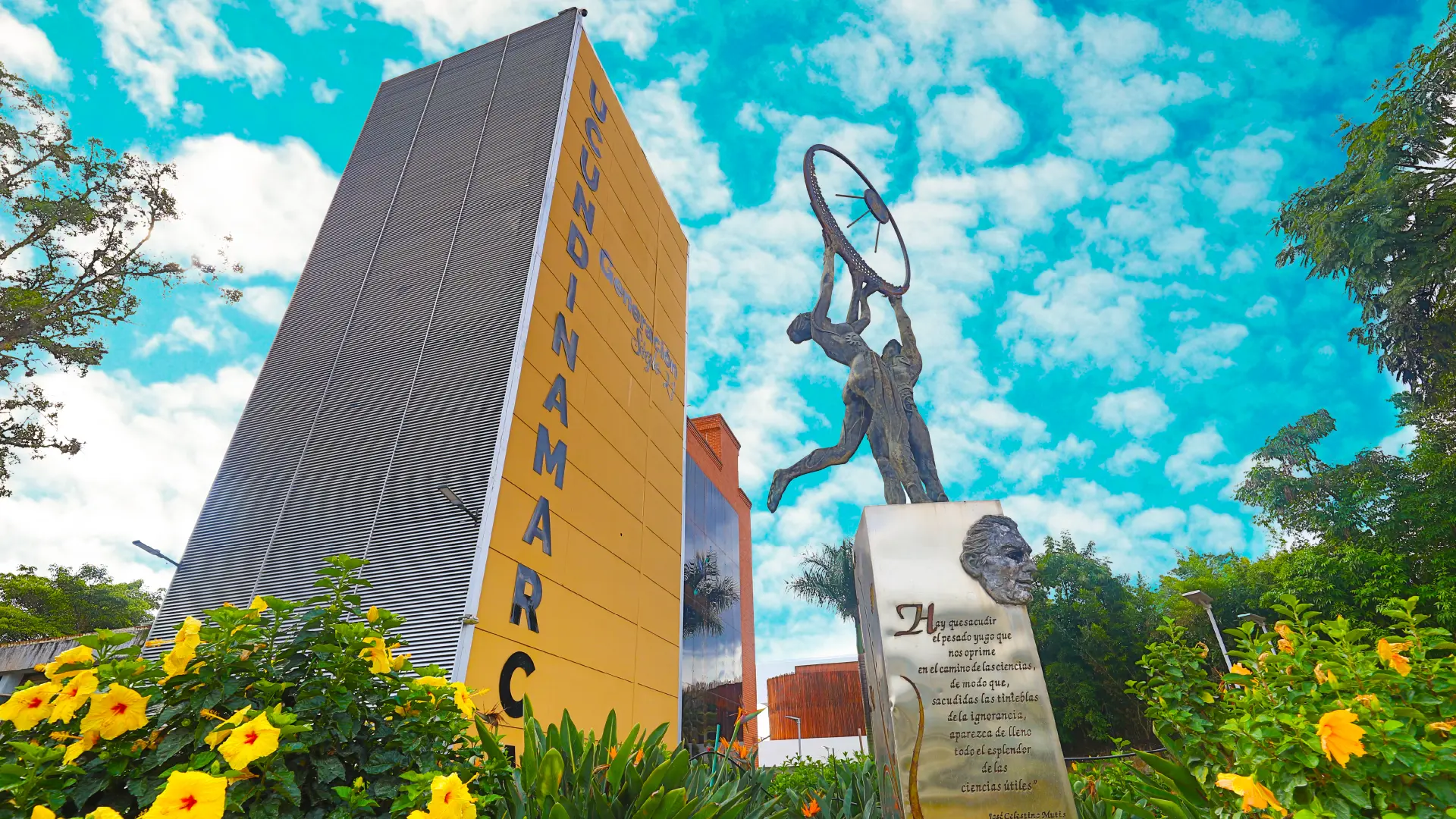
The Faculty of Education and the Social Sciences program held the First Institutional Conversation: “Water and Territory, the Urgency of a Symbiosis between Academia and Society”, a dialogical and reflective space that allowed attendees to analyze the importance of generating more visible and effective ways in the organization of permanent working networks between the university and rural communities for the protection and conservation of ecosystems and moorlands in Colombia.
“To speak of territory and water is to refer to life, and we have this correlation from the moment we are born, since we possess water in our bodies, which binds and connects us. For this reason, I invite you to visit, for example, the Sumapaz moorland and give yourselves the opportunity to feel the raindrops on your face, their caress, and thus, recognize the territory,” said Víctor Manuel Fernández Aguilar, a guest speaker at the discussion and a PhD in Education.
Fernández Aguilar, an environmental education specialist, urged the students attending from the different academic programs to promote bio-education from within each discipline. “To bioeducate, we need to see, hear, and know biologically where we come from and where we are going. Human beings have to understand that we are not superior to nature; that's in our blood, in our veins. We are children of ecosystems.”.
This academic space, a product of the Pedagogical Observatory I of Local, Regional and National School Contexts, of the Bachelor's Degree in Social Sciences, had the purpose of dialoguing and exchanging knowledge and ideas among specialists on the subject, society in general, teachers in training and the student community to generate projects between academia and society.
“The challenge is for the University of Cundinamarca to offer a postgraduate program that integrates social development, the environment, and territoriality, thereby fostering critical thinking in graduates. The region demands this type of professional; this would be an opportunity to impact the region and for the professional to develop their disciplinary field,” said Víctor Eligio Espinosa Galán, director of the Bachelor of Social Sciences program.
It is worth noting that during the discussion, the research and academic work carried out by the Faculty of Agricultural Sciences at the Center for Agro-environmental Studies in Fusagasugá, Guavio village, was presented, where more than 70 families benefit from a strategic study for the integrated management of water in the case of the Batán river sub-basin and the irrigation district of the La Esperanza farm of the University, among other agricultural and environmental projects.
For their part, the speakers invited the social sciences education community to present and coordinate strategic environmental research projects with other academic programs to contribute to building learning networks and exchanging knowledge about ecosystems.
News
News
News
News