News
2026-09-24
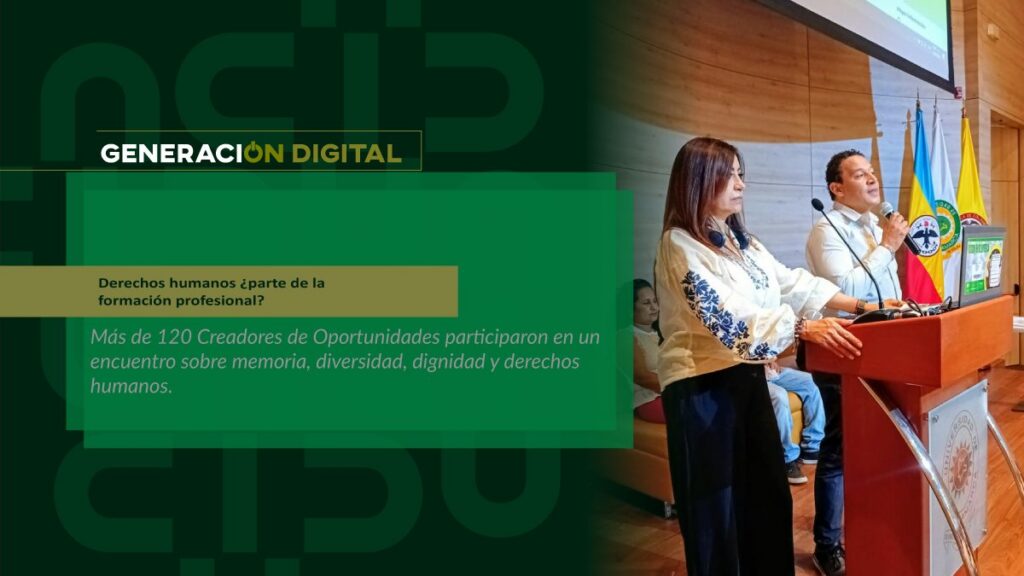
Human rights: part of professional training?
By: Alejandro García Suárez – Advisory Office of Communications


I am your virtual assistant, here to help you quickly and easily.
▲ Back to Top
Institutional assessment of the visit of the academic peers from the Ministry of National Education
By: Directorate of Self-Assessment and Accreditation
The visits by Academic Peers appointed by the Ministry of National Education for the verification of Institutional Quality Conditions were carried out taking into account the documentation submitted by the University of Cundinamarca for each of its development locations (Main Campus, campuses and branches) in accordance with Decree 1330 of 2019 and Resolution MEN 015224 of 2020. For the Fusagasugá and Soacha campuses, the visits were carried out between March 10 and 12, 2021, and for the branches of Ubaté, Girardot and the campuses of Chía, Facatativá and Zipaquirá between March 17 and 19, 2021.
The exercise involved the participation of 14 Academic Peers, who verified compliance with the six institutional conditions (student and professor selection and evaluation mechanisms, academic and administrative structure, sufficient resources for the fulfillment of goals, graduate program, welfare model and culture of self-evaluation) in the respective headquarters and branches.
For the development of the visits, the Directorate of Self-Evaluation and Accreditation worked on the deployment of logistical and technical aspects in conjunction with senior management, directors and staff of regional units and the process leaders associated with the respective quality conditions, which included the continuous support of the 47 officials responsible for supporting the different regulatory aspects before the Peers, the parameterization of 48 zoom rooms for the development of the sessions, the design and adjustments to the institutional graphic line of 55 presentations made with supported evidence of the process, the dedication of approximately 56 hours to attending to the visits, the collection and verification of 89 types of evidence requested by the Academic Peers, as well as the construction of the validation minutes of each of the 7 visits attended.
The various sessions saw strong participation from the university community: students, professors, graduates, and administrative and management staff. A total of 244 participants attended at the Fusagasugá campus, 163 at the Girardot branch, 179 at the Ubaté branch, 141 at the Soacha campus, 186 at the Chía campus, 176 at the Zipaquirá campus, and 233 visited the Facatativá campus.
As a result of the exercises, during the sessions the Academic Peers shared their different assessments of the evaluated aspects, recognizing relevant aspects such as the updating of institutional regulations and their correct application, the strategies implemented as a result of the health emergency, the articulation between the Strategic Plan, Development Plan and Rector's Plan, the accountability processes; design, structuring and relevance of the Transmodern Digital Educational Model (MEDIT), advances in the physical and technological infrastructure, activities developed by the School of Teacher Training and Learning and processes of teacher support.
Likewise, at the level of attributes related to the quality assurance system, its structure, the institutional model of self-evaluation, the culture of self-evaluation, the legitimacy in the exercise of self-evaluation of Institutional Conditions and the articulation between processes for the execution of improvement plans were highlighted.
Following these visits, the Institutional Conditions process continues for the University of Cundinamarca with the filing of verification reports with the Ministry of National Education by the Academic Peers, the evaluation of the process in the CONACES institutional procedures room and waiting for a concept on said conditions through the issuance of an administrative act by the Ministry of National Education.
Let this be an opportunity to express our gratitude for the commitment of all academic and administrative units of the institution, the effective participation of the university community in the process, and the willingness to defend the work carried out in recent years in the area of quality assurance at the institution.
News
News
News
News