News
2026-09-24
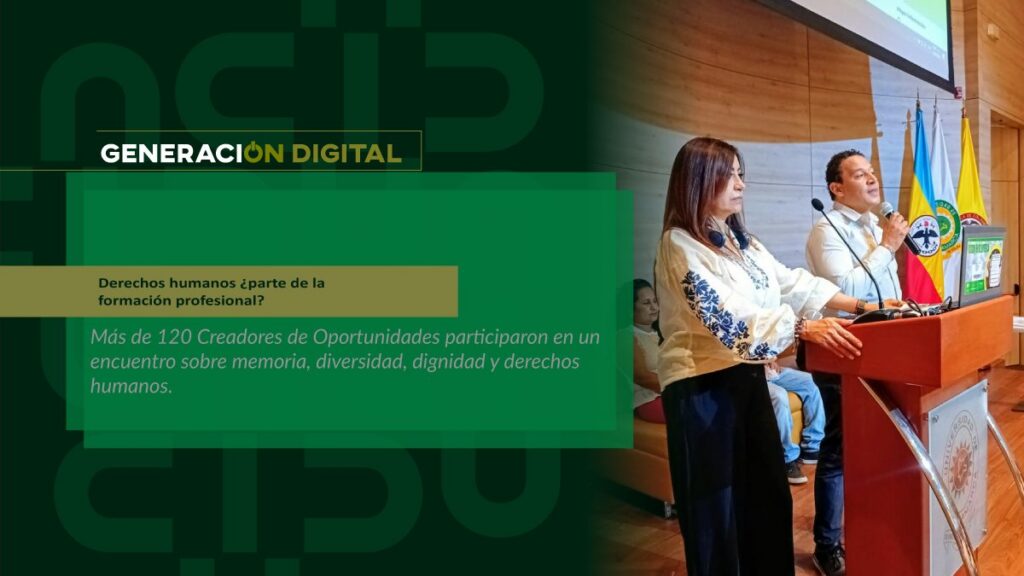
Human rights: part of professional training?
By: Alejandro García Suárez – Advisory Office of Communications



I am your virtual assistant, here to help you quickly and easily.
▲ Back to Top
“Urgent change is an ethical imperative”, UNESCO concluded.
For context, The Observatory of the Colombian University This document presents a summary of the main events and Colombian participation in the World Conference on Higher Education (WHEC). The following will be presented:
1) The context
The third WHEC took place 13 years after the second, held in Paris. It was initially planned for 2019-2020, but the pandemic and other organizational issues forced its postponement. UNESCO In the regions, this forced its postponement until now, and not in Paris, but in Barcelona, Spain. One of those changes was the appointment of the regional director of IESALC (the departure of the Chilean) Pedro Henríquez Guajardo and the arrival of the Barcelona native Francesc Pedró).
With a view to this Conference, Latin America and the Caribbean held, in 2018, in Córdoba, Argentina, the Regional Conference on Higher Education (CRES), whose debates were very ideological and, of course, unrelated to the context that the pandemic (unimaginable at the time) would bring.
In Córdoba, there was a strong influence from the public universities of Montevideo Group, and its insistence on the demand for education as a right, the State's focus on populations in need, and its minimal attention to issues such as virtual learning. Its ideological bias even led to a delay in the official adoption of the final declaration.
– Iesalac and some university presidents commit to bringing to life the proposals from CRES 2018 (March 2019)
For this very reason, many of the debates in Córdoba differ significantly from the reality and openness of the university and, in general, of post-pandemic higher education.
Barcelona, for its part, was a meeting place for spokespeople from all regions of the world, for academic lobbying, for the presentation of multiple positions and papers, and for an agenda proposed before the meeting, marked by the reality of the pandemic, technology, the massification of enrollment worldwide, the different offerings of non-university education, and the commitment of higher education to the SDGs Sustainable Development Goals.
The SDGs were suggested in 2015, when the 193 member states of the United Nations (including Colombia) unanimously approved them as a framework of political commitments to end poverty by 2030 and achieve a sustainable future, which means overcoming poverty and inequality, building safe and cohesive societies and caring for the planet.
According to the UNESCO report, during the three days of the Conference (May 18-20), 1,800 people from 130 countries participated in 120 round tables, 86 talks, 5 youth-led activities and presentations by various expert groups and documents (see some at the end of this report).
The round tables allowed academics from around the world to have a few minutes to present their studies, problems and proposals on the core topics of the sector: Access, quality, mobility, financing, internationalization, virtuality, pedagogy, evaluation, research, future prospects…
2) The messages
One of the most anticipated moments was the closing of the Conference, which was carried out by Stefania Giannini, Assistant Director-General for Education at UNESCO (photo), to identify the line that will be adopted from now on in matters of public policies in higher education at a global level, although these do not become mandatory for countries, unless they become irreversible trends.
In Colombia, for example, besides not having formalized a single, defined position or issue for the sector, it is also unclear how what comes out of Barcelona will be adopted, in this case, by a still unknown new government.
Unlike traditional conferences, where a final declaration is usually read, this was not done here, possibly due to previous experiences, difficulties in achieving consensus, little time for its construction, and political or critical positions of some attendees or governments.
Instead, what UNESCO presented was a roadmap for Higher Education for the next decade, called “Beyond limits. New ways of reinventing higher education”, This is a proposal, which is expected to be fully developed at the coordination meeting for the fourth Sustainable Development Goal SDG4 in November, of the 2030 agenda, and which refers to Quality Education. Click to download the document, built with contributions from Report of the UNESCO Global Group of Independent Experts on Universities and the 2030 Agenda (EGU2030), and the Report of the International Commission on the Futures of Education.
The university is expected to keep in mind the “threats” for the planet, such as climate change, the persistence of armed conflicts, the increase in poverty, economic inequalities, and the general decline of democracy.
Giannini explained the concept of this roadmap as a living document that generates a vision: “It is an invitation to continue exchanging and shaping ideas, adapting them to different contexts, guided by shared ethical principles. It establishes indicators for the joint creation of more open, inclusive, equitable, and collaborative higher education systems.”.
For UNESCO, this vision translates into the need for a change of mindset; thus:
The roadmap invites higher education systems to build bridges and promote partnerships that put sustainability at the center and use technology in an inclusive and creative way.
On this occasion, while higher education was again discussed as a public good and a universal right for all, not just a select few, and as an integral part of the right to education, this approach did not take center stage as in previous conferences. Instead, there was a more social, geopolitical, strategic, and cultural perspective on higher education, which must address global challenges (pandemics, climate crisis, political polarization, growing inequalities) and its dynamics: massive expansion, increased mobility, financing, and the role of technology.
It was affirmed that higher education must promote greater inclusion and diversity; likewise, that it requires academic freedom and the development of creative skills to address global challenges in order to serve society.
Giannini applauded Sweden's ratification of the Global Convention on the Recognition of Qualifications in Higher Education He called on member states to join this instrument that supports quality, inclusion, and cooperation—a task still pending (very pending) in Latin America.
UNESCO's idea is to hold a Higher Education Forum in 2027 as a follow-up to the roadmap, and in 2030, to define the objectives and goals of Higher Education taking into account the future of education and the objectives for 2050. Furthermore, in 2032, the 4th World Conference on Higher Education (WHEC2032) will be held.
3) The presence of Colombia
Although each country was supposed to have only four participants (for logistical and control purposes), Colombia surprisingly had a significant presence (nearly 20 people), especially university presidents. Some of them were scheduled directly with the organizers by the Ministry of Education, and many others secured their in-person participation either directly or through various international education organizations.
The government included the Ministers of Education (María Victoria Angulo), Curiously, without the presence of the Vice Minister of Higher Education, and with the presence of Deputy Director of Sectoral Development, Wilfer Orlando Valero Quintero) and the Minister of Science and Technology (Tito Crissién, accompanied by his deputy minister Nelson Orozco).
Germán Anzola Montero, of UDCA.
Additionally, the following were observed:
As reported by the Colombian University Observatory, Colombia's presence was not driven by analysis, discussion, or a national stance on the challenges facing higher education. Ultimately, each participant attended to listen, some to forge alliances and establish contacts for their higher education institutions and organizations, and going forward—for now—it remains to be seen whether this (almost outgoing) government or key stakeholders such as CESU or ASCUN, among others, will be encouraged to convene a national meeting to evaluate public policies in light of the paths ultimately outlined at the Conference.
Of the attendees named, some university presidents, as well as government officials, will no longer be included in this exercise.
The ministers, each on their own, participated in roundtables. Crissien spoke about the scientometric analysis of the state of publishing in Latin America (See the Minciencias review on this matter); while Minister Angulo presented the “balance” of her administration, in areas such as the Free Education Policy and the importance of Quality Assurance (See the Ministry of Education's review on this matter.).
4) Documents of interest
In https://whec2022.net/resources.php You can find the database of documents contributed by participants in the WCEH, as well as videos and best practices (including some from Colombian universities) and reports on the state of higher education in various countries (there is no report from Colombia).
Related information: Messages from WHEC, a wake-up call for Colombian Higher Education to "get its act together"“.
News
News
News
News