News
2026-09-24
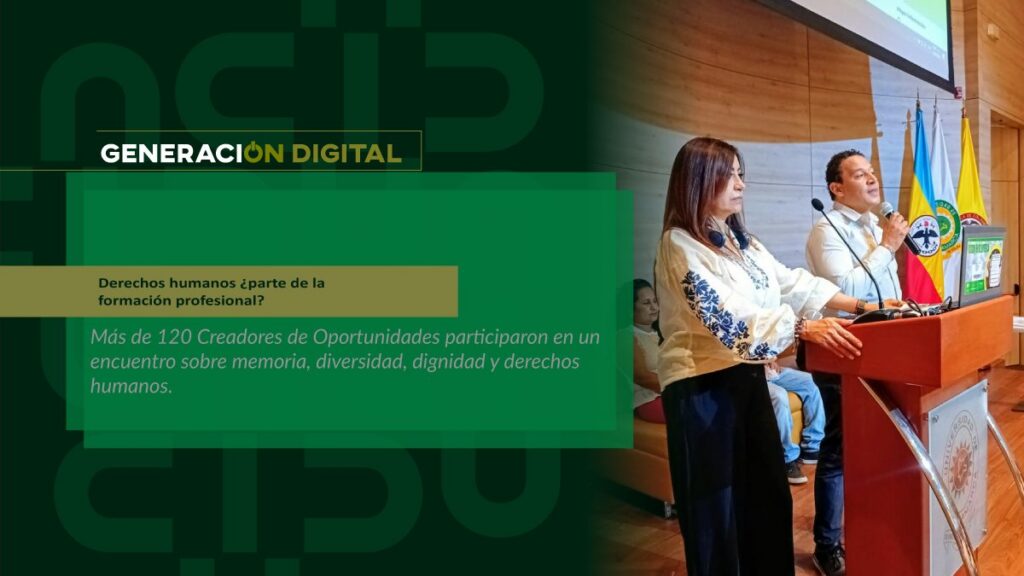
Human rights: part of professional training?
By: Alejandro García Suárez – Advisory Office of Communications


I am your virtual assistant, here to help you quickly and easily.
▲ Back to Top
In the institution, creating a space for dialogue and knowledge sharing among teachers is one of the goals of the Transmodern Digital Educational Model; therefore, within this process, strengthening academic, scientific, cultural, and social relationships through interaction and work is one of the substantive functions of UCundinamarca.
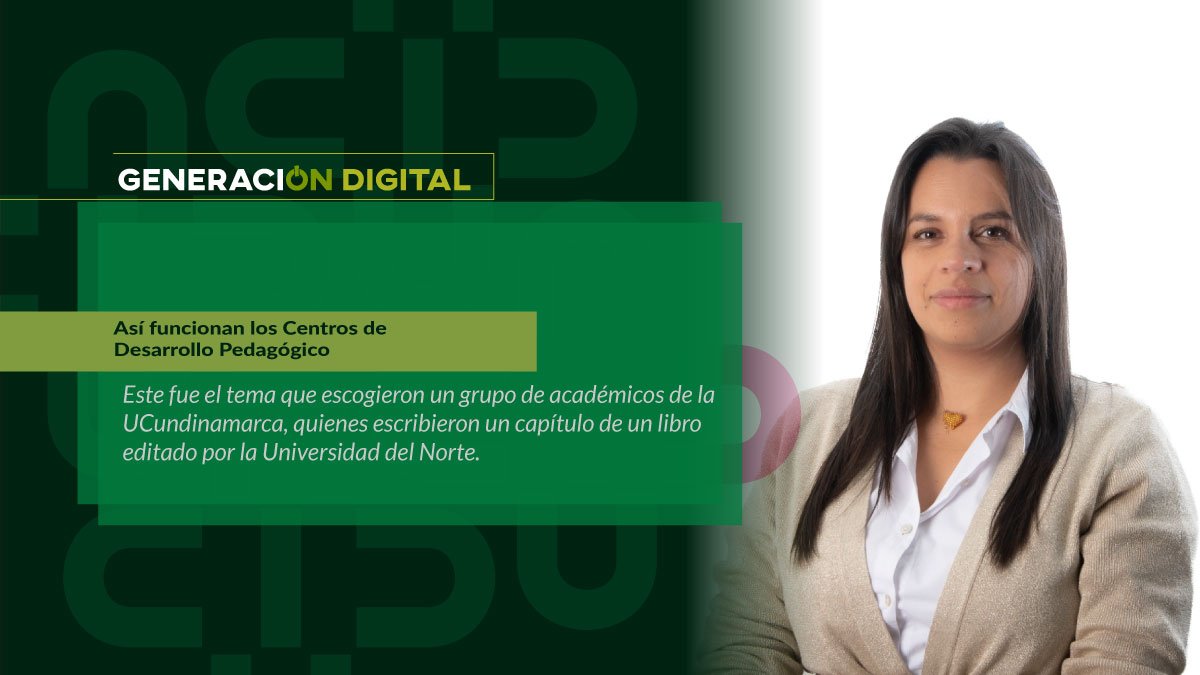
Today we present an example where these premises are relevant, with an interview with Dr. Liliana Milena Castro Bastidas, Head of Academic Development at the School of Teacher Training and Learning (EFAD), who, along with other colleagues, researched and wrote a chapter for the book: Inspiration, Action, Transformation. The chapter, published by Universidad del Norte in Barranquilla, is about how the Pedagogical Development Centers operate in Colombia.
UCundinamarca News: What was the process like for participating as co-authors in this book?
Liliana Milena Castro Bastidas: We, as a university, received an invitation from the CREA network to contribute a chapter to this publication. CREA is the network of teaching and learning centers of which we are a part. The book is owned and printed by Universidad del Norte. Its title is Inspiration, Action, Transformation: How Pedagogical Development Centers in Colombia Work. Our contribution is a chapter entitled "The Teacher Training and Learning School of the University of Cundinamarca: Education for Life, Democratic Values, Civility, and Freedom.".
UCundinamarca News: What is the theme of the chapter you wrote?
Liliana Milena Castro Bastidas: In that publication, we explain our experience as a training school. There, the reader can find out how we were founded and how the educational model has been implemented at the university. The chapter focuses on redefining the model through the lens of knowledge management and learning, based on continuous improvement and educational practice. We also discuss our mission, vision, and organizational structure.
We also explained how the training programs are structured and the support we provide to the School of Teacher Training and Learning (EFAD). Then we discussed everything related to this commitment, including resources and infrastructure, within the framework of the action plan established by the Vice-Rector for Academic Affairs. Furthermore, we described how we promote ourselves, our training networks, and the support resources and services available to teachers, such as the training programs themselves, among other topics.
UCundinamarca News: What lessons did you learn from participating as co-authors?
Liliana Milena Castro Bastidas: It taught us that it's possible to share the results we've achieved, thanks to the recognition we've gained in the national academic community. Likewise, it's important to share different pedagogical approaches with other universities, since we are one of the few institutions in the country with an educational model that goes beyond traditional teaching.
UCundinamarca News: What was the University of the North's comment on the work you did?
Liliana Milena Castro Bastidas: It was very positive, as the university highlighted the collaborative work among the higher education institutions involved in the initiative. Add to that the fact that aligning the different writing styles was no easy task. I also want to acknowledge all the support Red CREA provided us with the layout and chapter development.
UCundinamarca News: Which universities participated in the creation of the book?
Liliana Milena Castro Bastidas: This book was a collaborative effort between the University of Rosario, the University of the Andes, Uniminuto, and, of course, the University of the North.
UCundinamarca News: Who were involved in the research and writing of this chapter?
Liliana Milena Castro Bastidas: Those who participated were the academic vice-rector, Dr. Víctor Hugo Londoño, Fabián Tabla Rico, Francisco Cornejo Carrasco, María del Pilar Ochoa, Mónica Alejandra Bautista and myself.
UCundinamarca News: How can I purchase the book?
Liliana Milena Castro Bastidas: The book is available at the Book Fair in the stand from the University of the North and can also be obtained electronically free of charge.
If you wish to read the book in electronic format, click here. here
News
News
News
News