News
2026-09-24
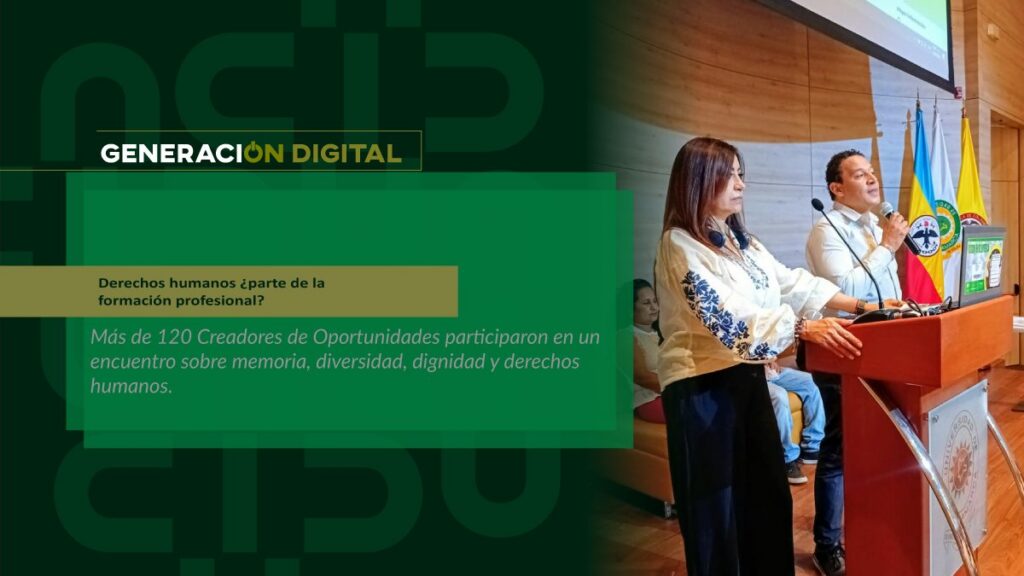
Human rights: part of professional training?
By: Alejandro García Suárez – Advisory Office of Communications


I am your virtual assistant, here to help you quickly and easily.
▲ Back to Top
By: Lorena Chacón – Communications Advisory Office
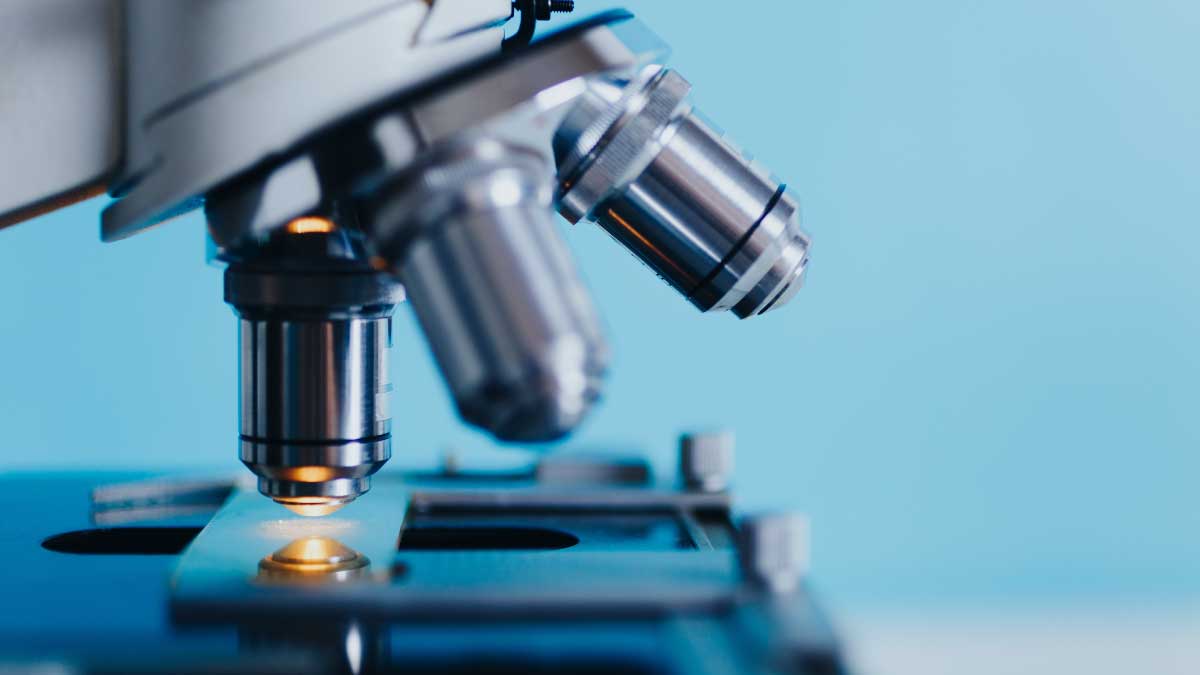
The research work was carried out during a semester-long internship at the Water Laboratory of the University of Cundinamarca, Girardot branch, and from there a scientific article was developed that compiled the results of the research and was published in a renowned international scientific journal.
The research was developed by Juan Daniel Arango Irreño, an environmental engineer who graduated from UCundinamarca in 2019, and the project's advisor, José Luis Lugo Arias, as principal investigators, in collaboration with a team of co-investigators made up of Elkin Lugo Arias, David Ovallos, Mario de la Puente, and Jesús Silva.
Engineer Arango, a graduate of UCundinamarca, who has stood out for the development of this research, describes that: “During the development of my internship, several doubts arose about the repercussions that traditional chemical coagulants may have on human health and if it is possible to replace them with natural substances, therefore an investigation was initiated in this regard, using natural coagulants and comparing their efficiency with one of chemical origin, traditionally used, such as aluminum sulfate.
It is worth noting, as the graduate points out, that aluminum sulfate is one of the most widely used chemical coagulants in the world, but recent research has shown that high concentrations of aluminum in the body are associated with neuropathological conditions. Because of this, different alternatives have been evaluated, such as natural coagulants, which are considered safe for human health and contain fewer contaminants than chemical products due to their biodegradability.
For his part, the research professor and advisor for the research, José Luis Lugo Arias, is an environmental and sanitary engineer with a master's degree in Environmental Engineering, focused on teaching, research, and consulting in environmental issues. He has been a professor at UCundinamarca since 2018 and teaches the following subjects:
water purification, wastewater treatment, thermodynamics, hydraulics and fluid mechanics.
Professor Lugo explains that: “The project arose from the need to involve students in working at the Girardot branch laboratory. Initially, the goal was for the student, now a graduate, to solve an operational problem at a small-scale water treatment plant by conducting tests with natural coagulants. That was essentially the objective of Juan Daniel Arango's internship, which he successfully completed.”.
Therefore, the main objective of this study was to evaluate the efficiency of mixing nopal mucilage and cassava starch for turbidity removal in water purification. To this end, test bottles and the treatment equipment (TA FQ-005/PE scale manufactured by Generatoris SA de CV of Mexico) were used to measure turbidity and pH parameters before and after the coagulation-flocculation process, which was applied to water from the Magdalena River in Colombia. Samples from two sampling periods were evaluated.
One sample was evaluated during the rainy season and the other under drought conditions, with initial turbidities of 316 NTU and 80 NTU, respectively. Aluminum sulfate, used as a reference coagulant, was found to achieve better turbidity removal results (up to 991 TP3T) compared to nopal (up to 60.41 TP3T) and the nopal-cassava starch combination (up to 671 TP3T), indicating that this mixture increases the effectiveness of the natural coagulants used individually.
The research paper titled in Spanish: "Efectividad de la mezcla de nopal y almidón de yuca como sustancias clarificantes en la purificación del agua: un estudio de caso en Colombia" was published in the English-language journal Heliyon under the same title.
This scientific journal is a leading publication from the Netherlands, part of the Elsevier network and indexed in Scopus. It ranks in the first quartile (Q1) due to its impact factor. Therefore, the research published in this journal guarantees the high quality of the manuscripts, which is why it is frequently consulted by researchers worldwide, thus highlighting its importance in facilitating the globalization of knowledge.
Professor Lugo confirms that: “The importance of the manuscript lies in its provision of an alternative and novel approach, employing mixtures of natural substances in water purification to reduce the toxicological effects of the chemicals used in coagulation processes, which can affect human health. The scope of the research was to test the efficiency of these substances in the laboratory.”
studied natural resources, with the aim of implementing them in water treatment plants (WTPs) in the future.”.
Thus, engineer Arango states that: “The work was carried out in two stages. The first stage referred to the methodology for the preparation of the coagulant and flocculant to be evaluated; and the second stage was based on laboratory tests to determine the efficiency of the natural substances evaluated in the elimination of turbidity from the surface water source being studied.
Some of the results showed that aluminum sulfate, as a reference coagulant, achieved better turbidity removal results (up to 991 TP3T) compared to nopal (up to 60.41 TP3T) and the nopal-cassava starch combination (up to 671 TP3T). One of the project's conclusions is that nopal, in combination with cassava starch at concentrations of 11 TP3T, 671 TP3T, and 331 TP3T, respectively, increases its combined effectiveness by an average of 8.51 TP3T. The concentrations used for coagulant alone (nopal) and combined with the flocculant (cassava starch) showed high removal rates, 60.41 TP3T and 67.041 TP3T, respectively.
Arango also states that: “The research demonstrated that in specific combinations of natural substances (67% nopal mucilage and 33% cassava starch), the effectiveness of the substances in turbidity removal can be significantly increased compared to when they work alone. This opens the door for future research that seeks to delve deeper into this topic and also aims to test other combinations with different natural substances. The research project also demonstrated the capacity of the University of Cundinamarca to generate scientific knowledge within its facilities thanks to its equipment and excellent staff.”.
The graduate mentions that the University provided him with the facilities and all the necessary equipment, supplies, and materials to carry out the research, which were essential in all phases of the project's development. He also clarifies that: “During this research, I received great support from professors José Luis Lugo Arias and Jhon Sandoval, who helped me structure the project, as well as support from laboratory technicians Óscar Useche and Rubén Bocanegra in developing the project methodology.”.
It is also noted that: “During his student years, when the project was being carried out, the graduate always demonstrated a willingness to work and developed activities beyond his internship, such as creating laboratory videos and related practical exercises to assist external visitors to UCundinamarca. These activities were also carried out after he had already completed his studies.”
”As a graduate, this demonstrates his interest in and love for UCundinamarca. Therefore, much of the project's success was largely due to Daniel, since he was responsible for conducting many laboratory experiments with my help and that of other professors. He carried out some experiments on his own with the support of the laboratory staff; being very disciplined, he acquired many laboratory skills, which is why I would like him to join the UCundinamarca laboratory team as a support staff member, because he will contribute greatly to the development of research on our university campus,” Professor José Luis pointed out, referring to Arango's work and dedication.
Engineer Arango says he would like to continue researching plant properties for environmental applications, especially in the areas of water quality, air quality, and soil restoration. He also encourages UCundinamarca students to let their imaginations and curiosity guide them, and once an idea captivates them, to find ways to make it a reality. He urges them not to hesitate to consult their professors and to explore the research equipment available at the university.
Likewise, Professor Lugo explains that at UCundinamarca, research is promoted through internal and external call projects, research seedbeds, the implementation of PIS in various academic semesters, research-based degree work modalities, research workshops, and inter-institutional alliances (such as knowledge networks).
Professor and researcher Lugo explains that: “In the research group to which I belong, the Udecino Environmental Research Group, Girardot branch, we work on research lines related to environmental issues such as: conservation biology and ecological processes; environmental sustainability of water and soil systems; hydrobiological resources and environmental assessment; environmental education and management; and soil management and conservation. These can be consulted in the GrupLAC database defined by Minciencias.”.
To conclude, researcher and professor José Luis extends an invitation to the institution's students: “The message for the students is to always strive to do things well, to put a lot of effort into what they love, and not to try to do things just to get them over with, but to think about important things, because we should always dream. Although everything worthwhile requires sacrifice, it can be achieved if you persevere and work with determination. It doesn't matter if it's research or not; there are other interesting things like entrepreneurship, social activities, innovation, among others, which, if the student sets their mind to it, they can achieve.”
"They can achieve it; they just need to exploit their strengths through the development of creativity, which young people have in abundance.".
To consult the scientific article mentioned, please see the following link: https://www.sciencedirect.com/science/article/pii/S2405844020311403
News
News
News
News