News
2026-09-24
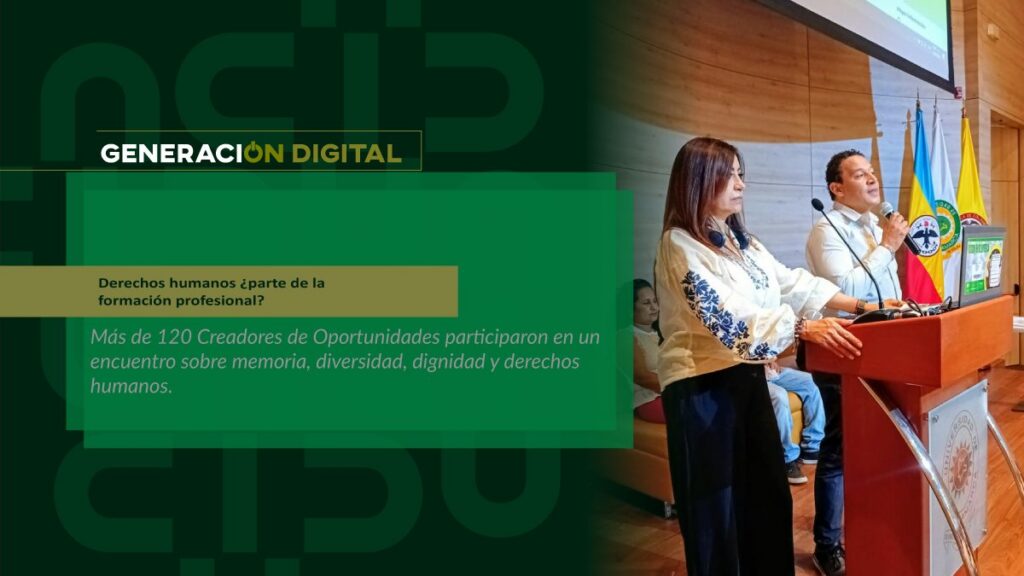
Human rights: part of professional training?
By: Alejandro García Suárez – Advisory Office of Communications



I am your virtual assistant, here to help you quickly and easily.
▲ Back to Top

Source: UN News Agency
The addition of this mineral would also contribute to the nutrition of children in their growth stage, explains the physical engineer Diego Fernando Coral Coral, Master in Physics from the National University of Colombia (UNAL) Manizales Campus, author of the research “Influence of calcium hydroxide on the physicochemical properties of corn starch”.
The research is being carried out in partnership with the Autonomous University of Mexico, where the current focus is on preventing osteoporosis in young adults using corn tortillas and other products such as nopal flour.
The project, developed in the Magnetism and Advanced Materials Laboratory of the UNAL Manizales Campus, seeks to offer regular consumers of this popular food in Colombia a natural alternative to increase calcium intake.
“This work is the product of three years of research we have conducted on the physical process of cooking corn; after this, we decided to implement a project focused on developing corn products modified with calcium hydroxide,” said engineer Coral.
The addition of calcium
Mixing water with calcium hydroxide and cooking it with the corn, measuring variables such as temperature, is essentially what researchers do during the process to fix the nutrient in the grain.
“Basically, the procedure consists of diffusing the calcium inside the grain, so that when it is ready to be ground and made into dough, it already includes the nutrient,” he explains.
“Scientifically, work is underway on a mathematical model based on modern macromolecular polymer theory and statistical mechanics to explain the gelatinization process of corn starch,” the project author stated.
“Furthermore, new perspectives are provided through characterization techniques that have so far been relegated to a secondary role.”.
This process also benefits small and medium-sized enterprises in the region, since corn is one of the most widely sold and consumed products in Colombia and Latin America.
This study could be applied to the production, preservation, and transport of this type of food, as well as a food alternative for people who are lactose intolerant, since they can include corn in their diet.
See article in UN News Agency
News
News
News
News