Fusagasugá Branch
2026-09-24
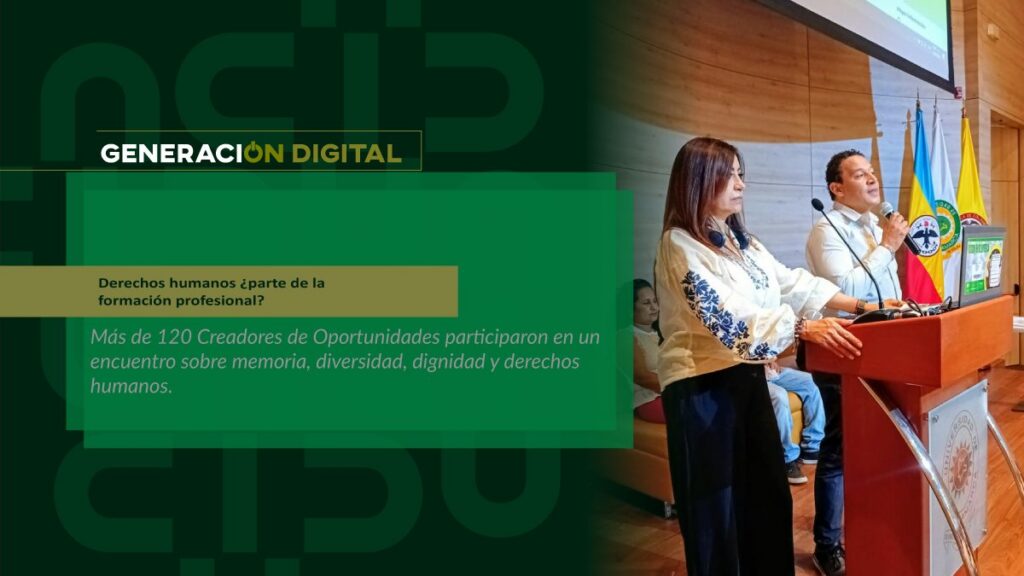
Human rights: part of professional training?
By: Alejandro García Suárez – Advisory Office of Communications



I am your virtual assistant, here to help you quickly and easily.
▲ Back to Top
Within the framework of the “curricular re-signification” proposed by MEDIT, at UCundinamarca a series of processes have been established to update the methodology and disciplinary approach of the different CADI (Disciplinary Learning Field) in the Business Administration, Agronomic Engineering and Zootechnics programs, pioneers in this process at the University and recently renewed in their qualified registration by the Ministry of National Education.
This exercise has involved various areas and departments, starting with the CADI program leaders themselves, who have been accompanied by the “Teacher Training and Learning School (EFAD S21)”, providing guidance on didactic, methodological and innovation aspects within the MEDIT framework, as well as the Academic Development Office and the program coordinators and the respective deans, promoting a constant dialogue in order to fulfill the objectives of this process.
The importance of this articulation has been determined by the experience of subject-matter professors and the new tools for mediating curriculum innovation, with the aim of ensuring program quality and generating a reinterpretation of topics so that they address student learning outcomes, as they face the challenge of solving 21st-century problems. Therefore, educational processes are needed that are oriented towards experiential learning and problem-solving, involving a high degree of student participation and an active role for the professor as a facilitator of knowledge, learning, and technology.
Likewise, on July 23, the adoption of best practices in educational innovation was presented to the senior management of UCudinamarca and the CADI leaders of these three pioneering programs. The presentation showcased the progress made within the structure through various innovative pedagogical and didactic proposals. In turn, EFAD S21 presented the progress in developing this strategy and the feedback received from other stakeholders in the process. This work reinforces the Institution's commitment to innovation in education through lifelong learning, democratic values, civic responsibility, and freedom.
In this sense, spaces for socialization and conversation of experiences are fundamental in this type of process, as they involve the different voices of the agents involved in bringing MEDIT to life; from the planning and organization structure of learning, this contrasted with the analyses and results that are collected throughout the phases of the process.
Finally, the invitation is to continue rethinking the University and the role of each participant within it, within an exercise that overcomes the barriers and limits generated by the current situation, in order to address the challenges and difficulties of a translocal world that needs problem-solving skills from our students and future graduates.
News
News
News
News