News
2026-09-24
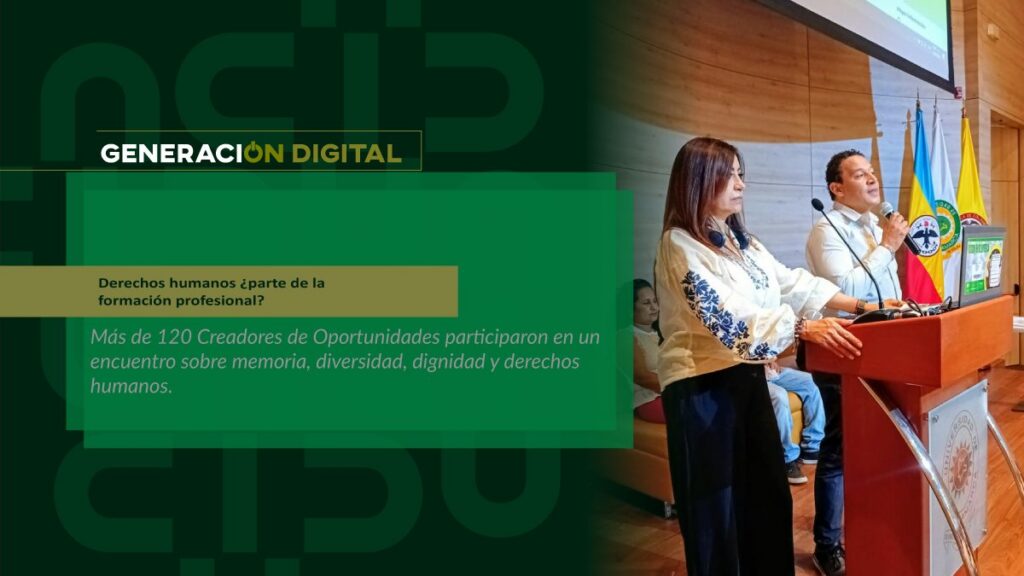
Human rights: part of professional training?
By: Alejandro García Suárez – Advisory Office of Communications


I am your virtual assistant, here to help you quickly and easily.
▲ Back to Top
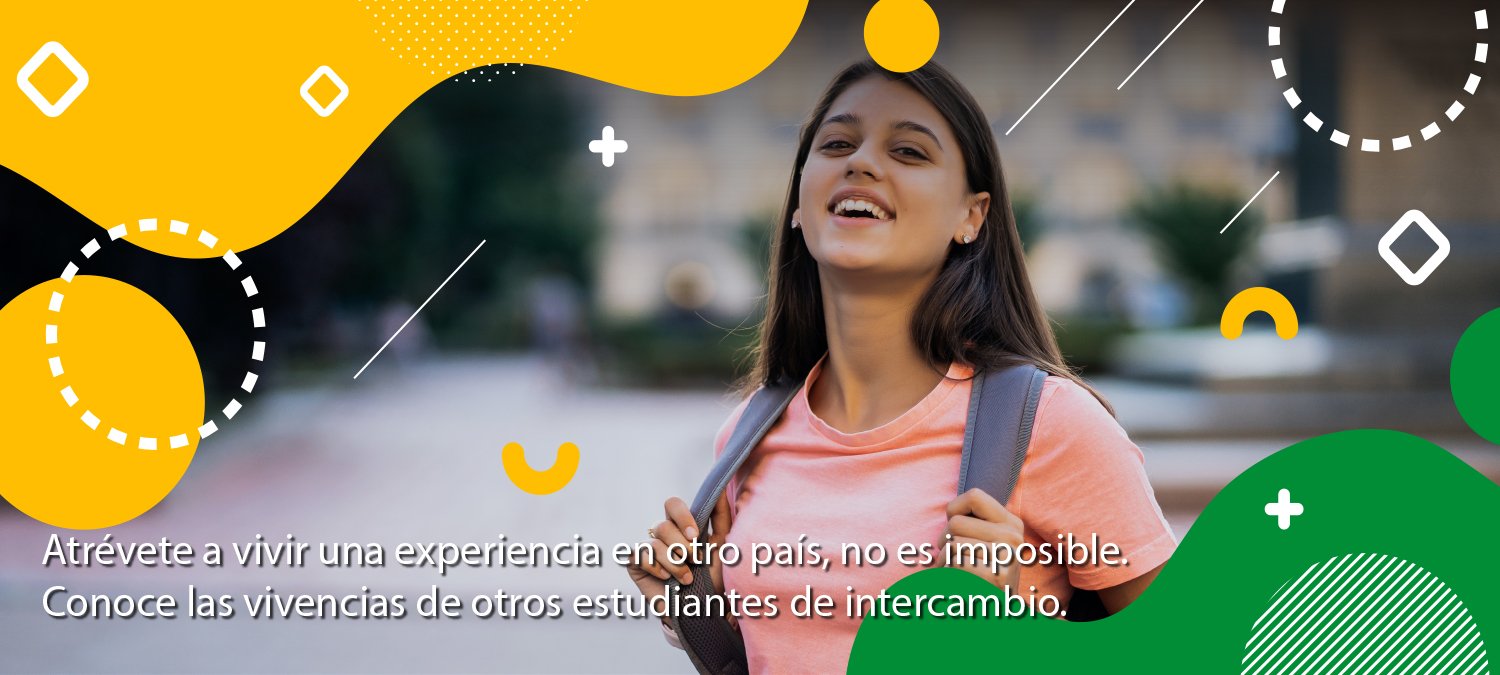
As this year draws to a close, we would like to extend a special invitation to the entire UCundinamarca community to encourage you to consider traveling abroad and enhancing your studies at other universities with which we have special partnerships.
Fabián Leal Orjuela, director of the internationalization office of the University of Cundinamarca 'Dialogando con el Mundo' (Dialoguing with the World), calls for people to stay connected to the institution's website regarding current agreements.
“To register for the programs, you can check the website for the dates when the calls for applications open. There you can register and not miss out on this fabulous experience,” said Kimberly Andrea Vélez Rodríguez, manager of academic mobility and strategic alliances at UCundinamarca.
“We are an office that works to promote academic mobility; we have managed to establish a policy so that our students and academic population can enjoy a mobility experience today,” said Kimberly Andrea Vélez.
Today there are 3 programs in the internationalization policy:
-Student ambassadors: The strategy is to establish cooperation alliances to participate in the main programs for international academic mobility, such as the PILA Colombia Program.
-Teacher ambassador: Support for teachers to enhance their studies abroad.
-Casa Cundinamarca: It is a program that seeks to optimize the exercise of international internships (as a graduation option) and professional practices abroad, for students of all programs.
Currently, there are dozens of agreements, some of which are virtual due to the changes in education that have been accelerated by the current pandemic.
“There are agreements such as the PILA Colombia Program and in universities in Latin America in countries such as Mexico, Argentina, Brazil, Chile and Peru,” said the manager of academic mobility and strategic alliances.
The University of Cundinamarca, as a social organization of knowledge, operates at a historical moment where professors, students, graduates, and administrative staff undertake the task of redefining, rethinking, and reinventing the institution in order to respond to the challenge of educating for life, democratic values, civility, and freedom, being able to solve problems in their environment through the generation, management, and transmission of knowledge.
The "Dialoguing with the World" Policy takes into account the CNA accreditation guidelines and the regulations of the Ministry of Education, incorporating the principles and strategic actions from international benchmarks and trends, as well as the state of the art of the disciplines and the quality indicators recognized at the national and international level; stimulating contact with distinguished members of academic communities and promoting cooperation with institutions from a translocal approach.
Our students confirm the great experience:
-“I feel renewed, grateful and motivated to go for more. I met many people who are now my international family,“ Katherine Tique, from Argentina.
“Being in Colombia was an incredible experience. I grew a lot, learned a lot, and advanced academically and personally,“ said Luana Yakira Rodrigues Mendes, a student from Brazil who traveled to Colombia to study at the University of Cundinamarca.
-“Despite the global health situation, I have been able to take advantage of the moments and opportunities, and this has helped me grow professionally and academically,“ María Camila Lozano, from Mexico.
These are the active International Agreements of the University of Cundinamarca. Take the plunge!
-Autonomous University of Tamaulipas. Mexico.
-Lázaro Cárdenas Technological Institute. Mexico.
-National University of Concepción, Paraguay.
-Agreement on scientific and pedagogical cooperation – Federal University of Roraima – University of Cundinamarca. – Download documents
-“Academic Mobility Colombia – Brazil – BRACOL”.
-CAEP Colombia.
-Technological Institute of Celaya, Mexico.
-University of Chubut, Argentina.
-University of Colima, Mexico.
-University of Colima, Mexico.
-Cuauhtémoc University, Aguascalientes Campus, Mexico.
-Fulbright Commission Colombia.
-Secretariat of Culture of the State of Hidalgo, Mexico.
-Institute of Animal Science, Cuba.
-Federal Institute of Education, Science and Technology of Southern Minas Gerais, Brazil.
-Autonomous University of the State of Morelos, Mexico.
-PILA Program.
-Adventist University of Chile.
-Autonomous University of Yucatan, Mexico.
Report by: Sindy Valbuena and Dagoberto Méndez.
News
News
News
News