Fusagasugá Branch
2026-09-24
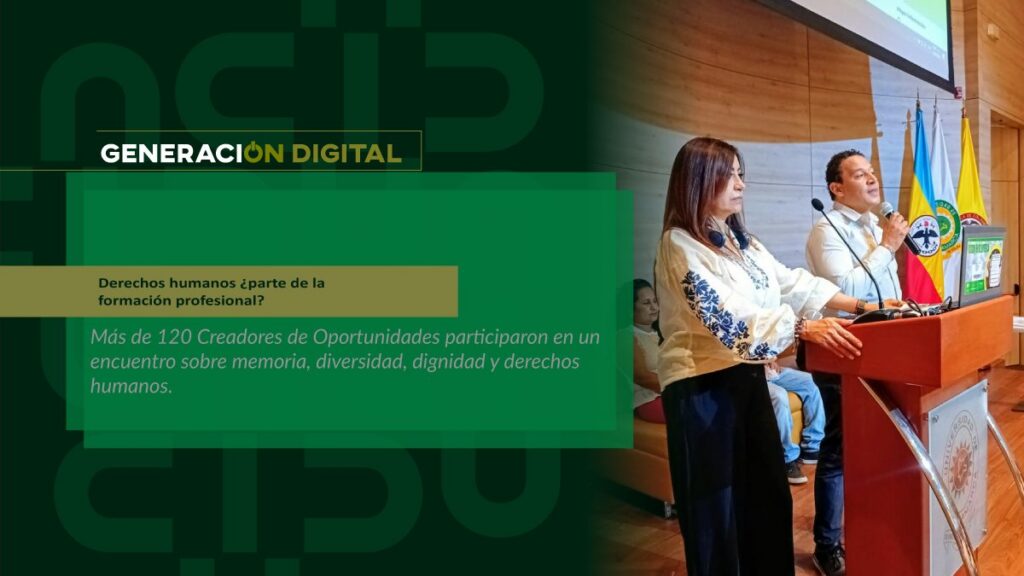
Human rights: part of professional training?
By: Alejandro García Suárez – Advisory Office of Communications



I am your virtual assistant, here to help you quickly and easily.
▲ Back to Top
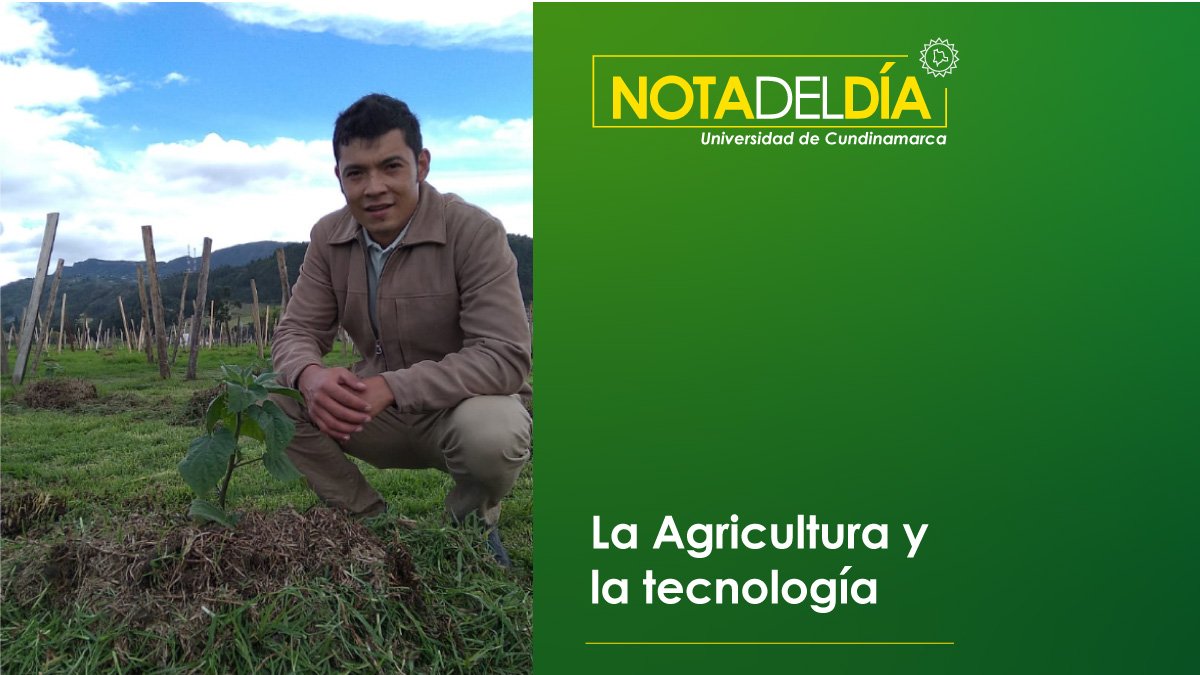
The world's food supply depends on agriculture; however, it is one of the sectors most affected by the chain of intermediaries, the national budget, and currently by the pandemic, which has impacted many producers.
According to a World Bank report, the approximately 500 million smallholder farmers worldwide, who produce 80% of the world's food, are among the poorest and most malnourished groups. In fact, by 2030, climate change could push more than 100 million people into extreme poverty, primarily due to its impacts on agriculture and food security.
However, the use of technology in agriculture could reduce future food security risks. Andrés David Ceballos Marín, an agronomist from UCundinamarca, spoke to us about this topic and explained how the digital revolution could help transform food and agriculture, creating more efficient, equitable, and environmentally sustainable ways to feed the world.
What do we mean when we talk about precision agriculture and how is it used in Colombia?
Andrés David Ceballos Marín (ADCM) – Precision agriculture is a technological tool that allows for the diagnosis of any type of event or variable influencing all types of agricultural production. It requires the use of Global Positioning Systems (GPS), sensors, satellites, and aerial imagery, along with Geographic Information Systems (GIS), to estimate, evaluate, and understand these variations. In Colombia, it is used and implemented so that, through data analysis, efficient agronomic decisions can be made, aiming to improve agricultural yields. Essentially, it consists of reporting even the smallest detail at a specific point in time.
How does this type of agriculture increase production, decrease costs, and reduce environmental impacts?
ADCM – It is important to recognize first that agricultural production depends on soil health, climate, past experiences, and varies across space and time. Therefore, agronomic management decisions vary according to specific site and time, and are not rigidly programmed as they are in reality today with the agricultural production system of the “famous miracle recipe.”.
If this technological tool is applied taking into consideration all the variables involved in a production system, in a conscious, efficient, and life-friendly manner, it can significantly improve production, reduce production costs, and imminently mitigate the negative environmental impacts of the industry with its technological packages of agrochemical inputs.
How does technology benefit professionals in Agronomy?
ADCM – This tool allows agricultural professionals to perform electronic controls and monitoring applied to data collection, information processing, and decision support for the temporal and/or spatial location of inputs or activities necessary for agricultural production. Precision agriculture has the potential to provide professionals with modern tools to manage their production, making it more efficient and sustainable in the field.
Instead of indiscriminately applying fertilizers or pesticides over large productive areas, disrupting the harmony of systems and polluting natural ecosystems, this model allows professionals to "fine-tune their aim," raise awareness, and apply non-polluting products such as mineral broths, organic fertilizers, biofertilizers, biological control, and other planet-friendly alternatives that give life to the soil and ecosystems in general, rather than working under conventional models.
What is the current state of agriculture in Colombia?
ADCM – It's not great, but it's not terrible either. There's a lot of work to be done.
Small and medium-sized producers are suffering considerably due to imports of products arriving at very low prices from other countries. For example, FENALCE reported in 2018 that, since the signing of the Free Trade Agreement with the United States in 2012, approximately 3,600,000 tons of corn are imported annually. This is despite Colombia having excellent environmental conditions for producing enough corn to feed its 50 million inhabitants. And corn is not the only product affected; we can also mention rice, potatoes, and other products.
It is necessary to consider an agrarian reform that allows supporting and incentivizing small and medium producers to produce healthy food, free of conventional agrochemical packages, and to engage in fair trade with high-quality standards and continuous support from government entities and specialized exporters.
What is the future of agriculture?
ADCM – Agriculture in Colombia is undergoing a transition to a new production model. New generations of agricultural professionals with environmental and sustainability awareness can significantly improve the future of agriculture in Colombia. By changing agricultural production methods and basing them on applied science and technology, the country will surely be able to produce healthy food for domestic consumption and even for export. It's important to remember that Colombia has the greatest agricultural and food production potential in Latin America, and this potential can be harnessed through sustainable and clean agriculture.
News
News
News
News