Fusagasugá Branch
2026-09-24
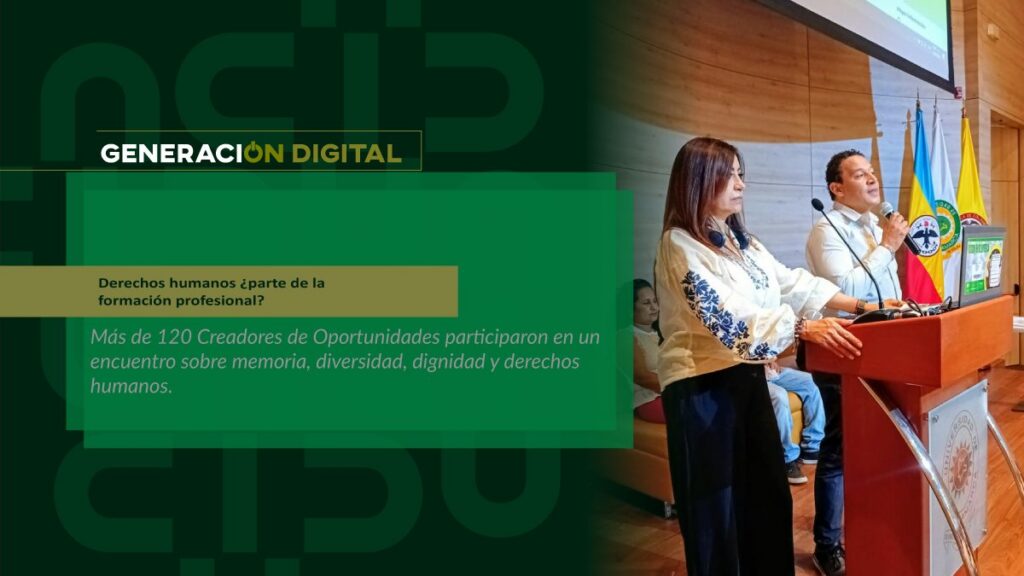
Human rights: part of professional training?
By: Alejandro García Suárez – Advisory Office of Communications


I am your virtual assistant, here to help you quickly and easily.
▲ Back to Top
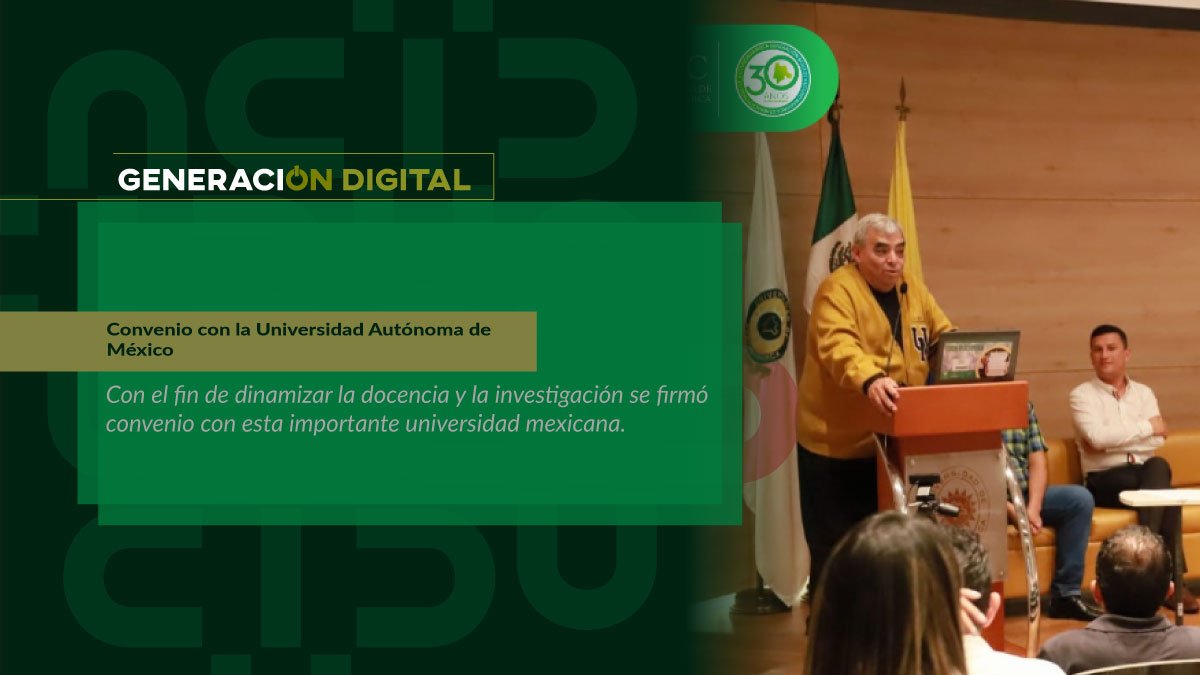
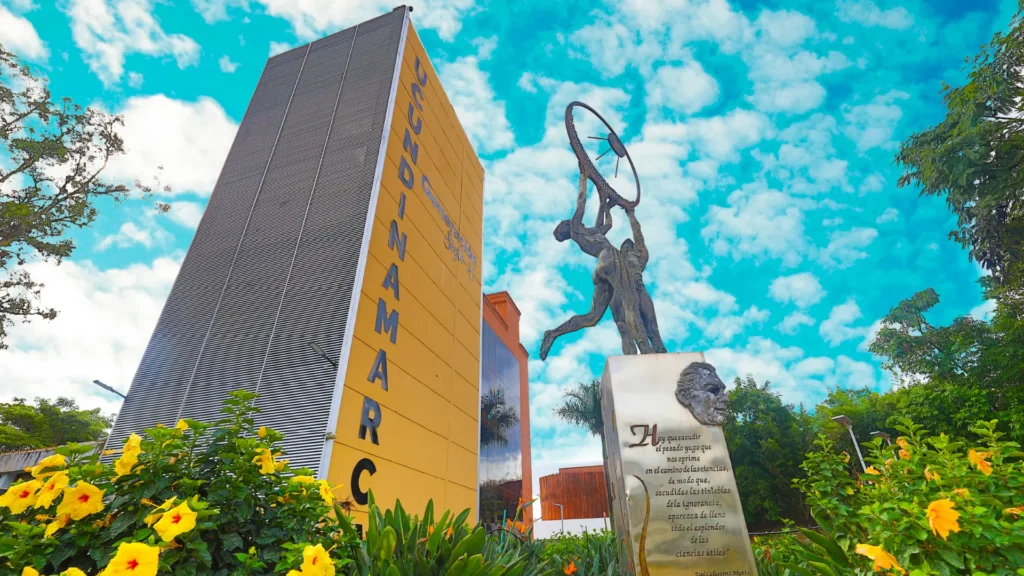
The event, held on October 30th in the auditorium of the Knowledge Management and Learning Center in Fusagasugá, was attended by Engineer José Francisco Cortés Ruíz Velasco, a tenured professor at the College of Sciences and Humanities Azcapotzalco; Dr. María Olivia Noguez Córdova and Dr. René Miranda Ruvalcaba, tenured professors at the Cuautitlán Faculty of Higher Studies. Representing the University of Cundinamarca were Professor Gabriela Romo, coordinator of the Environmental Engineering program at the Facatativá campus; Dr. John Alexander Moreno Sandoval, Dean of the Faculty of Agricultural Sciences; and Dr. Víctor Hugo Londoño, Academic Vice-Rector.
UCundinamarca News interviewed Dr. René Miranda Ruvalcaba about the scope of this agreement that will boost teaching and research.
UCundinamarca News: How did this agreement come about?
René Miranda Ruvalcaba: The agreement arose from an invitation to a Green Chemistry course in Cali, where I met Professor Gabriela Romo. Later, I was invited to the III International Congress, Environmental Engineering in the 21st Century, where I gave a presentation. There, she expressed interest in establishing an agreement with our institution, which we successfully achieved three months ago with the Collaboration Agreement between the National Autonomous University of Mexico and the University of Cundinamarca.
UCundinamarca News: Why is this signed agreement important?
René Miranda Ruvalcaba: This agreement is important because it will achieve academic interaction between the two institutions for mutual benefit in teaching and research.
UCundinamarca News: What does the agreement cover?
René Miranda Ruvalcaba: It is a general framework agreement from which we expect specific agreements with the different university programs to emerge in the coming months, according to the interests of the parties.
UCundinamarca News: What is the importance of Latin American universities carrying out these types of exchanges?
René Miranda Ruvalcaba: The simple fact that we are Spanish speakers and share very similar interests and cultures fosters better understanding. In this sense, it facilitates integration processes. Furthermore, the economic barrier is substantially different compared to developed countries. Proof of this is that we now have agreements with universities in Ecuador, Peru, Chile, and Costa Rica, among others.
UCundinamarca News: What can UNAM contribute to the University of Cundinamarca?
René Miranda Ruvalcaba: We have extensive experience as an educational institution; so much so that we've been among the top 100 universities in the world for two months and are ranked as the most outstanding in Latin America. Furthermore, we're ranked 32nd globally in sustainability. Therefore, I believe we can contribute a great deal from all academic fields, given our experience.
UCundinamarca News: During your visit to the Fusagasugá campus, what have you enjoyed the most?
René Miranda Ruvalcaba: The human and professional qualities of its staff are outstanding. Furthermore, they have excellent infrastructure. It's clear that the institution has a long-term vision and a constant commitment to quality education.
UCundinamarca News: What other activities will you be doing during this visit?
René Miranda Ruvalcaba: From October 31st to November 3rd, we will be holding a workshop called “Green Chemistry, Principle by Principle,” aimed at students and professors from the Faculty of Agricultural Sciences. We also have scheduled working sessions with faculty members from various programs within the faculty to outline joint research projects, mirror classrooms, and student exchange programs, among other topics.
UCundinamarca News: The revolution in information and communication technologies has led many young people to prefer training on various educational platforms. What is your view on this reality?
René Miranda Ruvalcaba: When I saw the first computer at my university, it was kept in an office, and they hardly allowed anyone in to look at it, much less use it. Now that has changed, and the widespread availability of this tool and the internet has transformed the world. Many learn through this medium; however, nothing replaces personal contact with the teacher and hands-on practice, so in-person learning will continue to be one of the main methods of learning in universities around the world.
News
News
News
News