News
2026-09-24
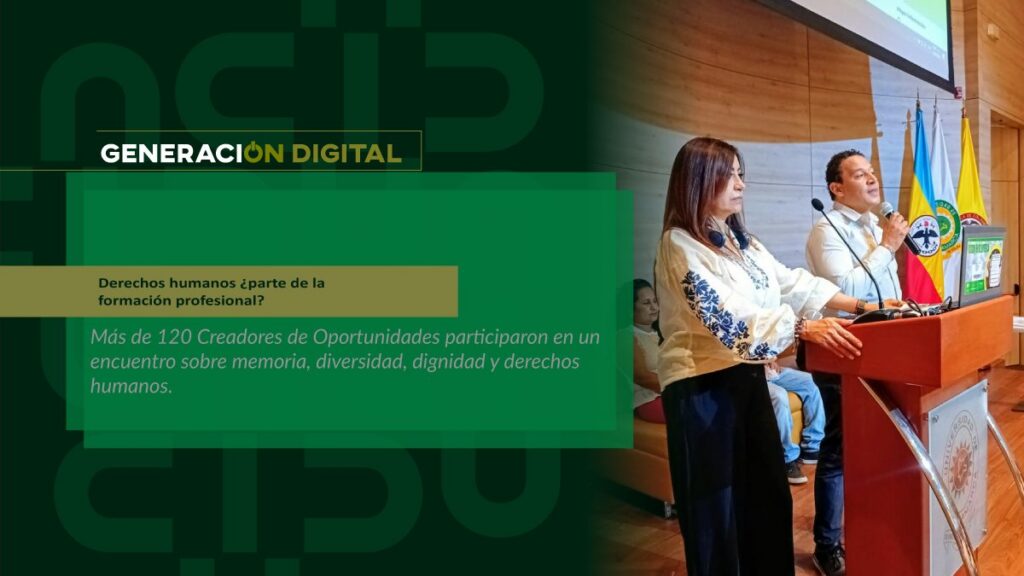
Human rights: part of professional training?
By: Alejandro García Suárez – Advisory Office of Communications



I am your virtual assistant, here to help you quickly and easily.
▲ Back to Top

Source: The Observatory of the Colombian University. Why are the actors involved in accreditation different from those involved in quality assurance?
July 2/20 In a regulatory environment as broad and complex as that of Colombian education, the latest regulations list different actors for accreditation and for quality assurance.
Through Decree 843, dated June 13, the Government modified the actors of the National Accreditation System, and with this changed article 2.5.3.7.1. Decree 1075 of 2015, or the Single Regulatory Decree of the Education Sector, reducing the number of actors in the Higher Education Quality Assurance System, listed in article 2.5.3.2.1.3.
This creates confusion regarding the real articulation and integration, as a system, of the sector when defining public policies in higher education.
The actors were thus formed (those in red are in the first but not in the second):
| Article 2.5.3.2.1.3. Actors of the Higher Education Quality Assurance System | Article 2.5.3.7.1 Actors of the National Accreditation System. |
|---|---|
| (Taken back to Article 9 of Agreement 02 of 2020, on new accreditation guidelines) They are Actors in the Higher Education Quality Assurance System: a) Ministry of National Education (MEN). b) Ministry of Health and Social Protection. c) National Council for Higher Education (CESU). d) National Accreditation Council (CNA). e) National Intersectoral Commission for Quality Assurance in Higher Education (Conaces). f) Ministry of Science, Technology and Innovation (CTel). g) Colombian Institute for the Evaluation of Education (Icfes). h) Colombian Institute of Educational Credit and Technical Studies Abroad “Mariano Ospina Pérez” (Icetex). i) Intersectoral Commission on Human Talent in Health (CITHS). j) Higher education institutions and those authorized by law to offer and develop higher education programs. k) The academic and scientific community in general. l) Academic peers. m) All those entities that intervene in the development of Higher Education. | The National Accreditation System, created by article 53 of Law 30 of 1992, is made up of the following actors:
a) Ministry of National Education b) Ministry of Science, Technology and Innovation e) National Council for Higher Education -CESU d) National Accreditation Council - CNA e) Institutions that opt for accreditation f) The academic and scientific communities g) Academic peers
|
.
Article 2.5.3.2.1.2. Higher Education Quality Assurance System. It is the set of institutions and bodies defined by the current regulatory framework, which are coordinated through designed policies and processes to ensure the quality of the institutions and their programs. This system promotes self-evaluation, self-regulation, and improvement of the institutions' educational, academic, teaching, scientific, cultural, and outreach activities, contributing to the advancement and strengthening of their community and academic outcomes, under the principles of equity, diversity, inclusion, and sustainability.
Article 3 of Agreement 02 of 2020. Accreditation is Accreditation is the recognition by the State of the high quality and impact of academic programs and institutions in the region and the country, taking into account their legal status, identity, mission, type, level of education, and modality. Accreditation promotes the strengthening of a culture of high quality in institutions and academic programs, supported by internal quality assurance systems.
Although the standard defines what quality assurance and accreditation are, there are common scenarios between the two that do not clearly explain why some actors in one cannot participate in the other.
For example, why can't higher education institutions (HEIs) that haven't yet opted for accreditation participate in the process, given that they constitute a fundamental benchmark for defining accreditation? For instance, how can a higher level be accredited if the existence of lower levels is unknown? How can the accreditation process disregard other ministries and entities like Icetex and Icfes, if these impact the development of both accredited and non-accredited HEIs and programs?
If accreditation recognizes the impact on the region and the country, and is supported by Internal Quality Assurance Systems, why does it only involve a few actors?.
Something is definitely not clear.
News
News
News
News