News
2026-09-24
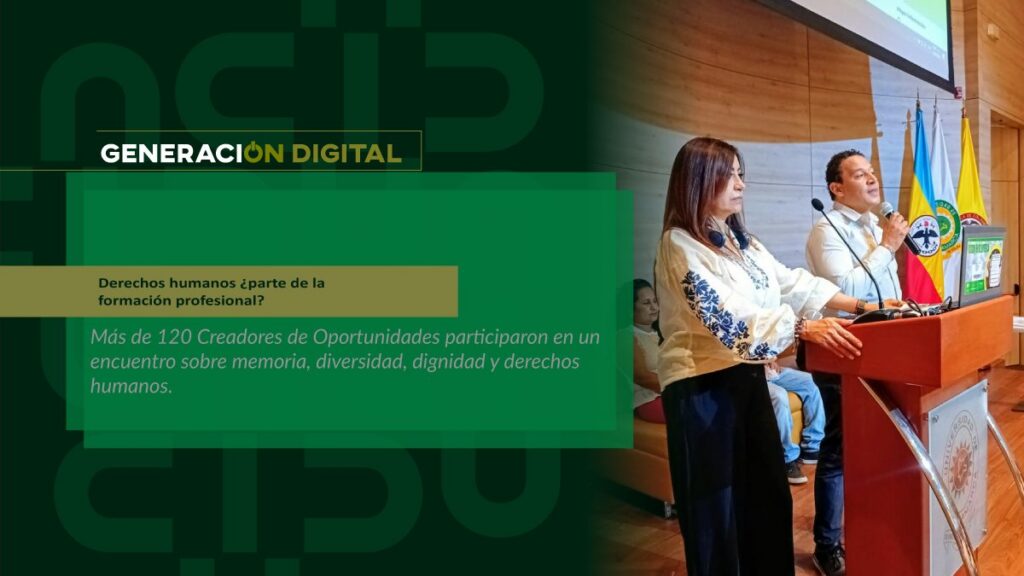
Human rights: part of professional training?
By: Alejandro García Suárez – Advisory Office of Communications



I am your virtual assistant, here to help you quickly and easily.
▲ Back to Top

#PlanetUCundinamarca This initiative creates spaces for analyzing national and international events, broadcast via Facebook Live with academic guests. These discussions foster reflection among the university community and the general public. On August 29th, the first analysis focused on the Amazon fires, which have caused immense losses. Experts predict that the regeneration of the burned hectares will take more than a century.
According to biologist Jack Frank García, “the conservation, promotion and prevention of the environment is everyone’s responsibility and commitment, so it is urgent and essential to make changes in the behavior of all people.”.
For her part, Professor Sandra Cifuentes affirmed that the animal science program is implementing agricultural production from an environmental perspective, integrating technical and environmental components, raising awareness in communities, supporting producers, and incorporating practical experiences in schools. She emphasized that “it is essential to foster awareness based on a preventative mindset. Animal science can be used to develop ecological livestock farming.”.
Climate change, the great loss of biodiversity, the drastic reduction of water sources, air pollution, and the inappropriate use of natural resources are the main factors to consider in order to provide solutions and mitigate the high rates of environmental impacts.
As a result of the fires that are happening in different places, a series of consequences are triggered for both the environment and the health of people, because in one way or another, everything that happens in the ecosystem is directly related, and, therefore, is mutually compromised.
According to academics, the regeneration of the rainforest can take between 100 and 200 years, since the Amazon rainforest, due to its humidity, is a great reservoir of biodiversity because it is home to a wide variety of species that store carbon.
In Fusagasugá, the Faculty of Agricultural Sciences and the programs of animal science and agriculture at UCundinamarca, taking into account Law 1876 of 2017, the National System of Agricultural Innovation, are carrying out actions and projects that include teachers, students and the community, such as: The use of water resources and the evaluation of the environmental impact, application of biomonitoring methods and devices for water treatment, among others.
News
News
News
News