News
2026-09-24
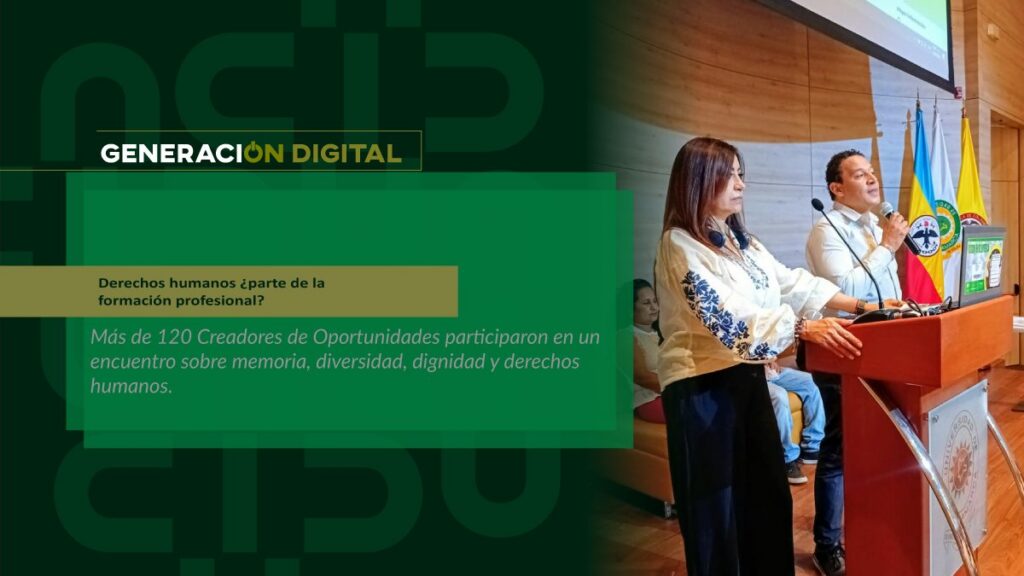
Human rights: part of professional training?
By: Alejandro García Suárez – Advisory Office of Communications



I am your virtual assistant, here to help you quickly and easily.
▲ Back to Top

By: Alejandro García Suárez – Communications Advisory Office
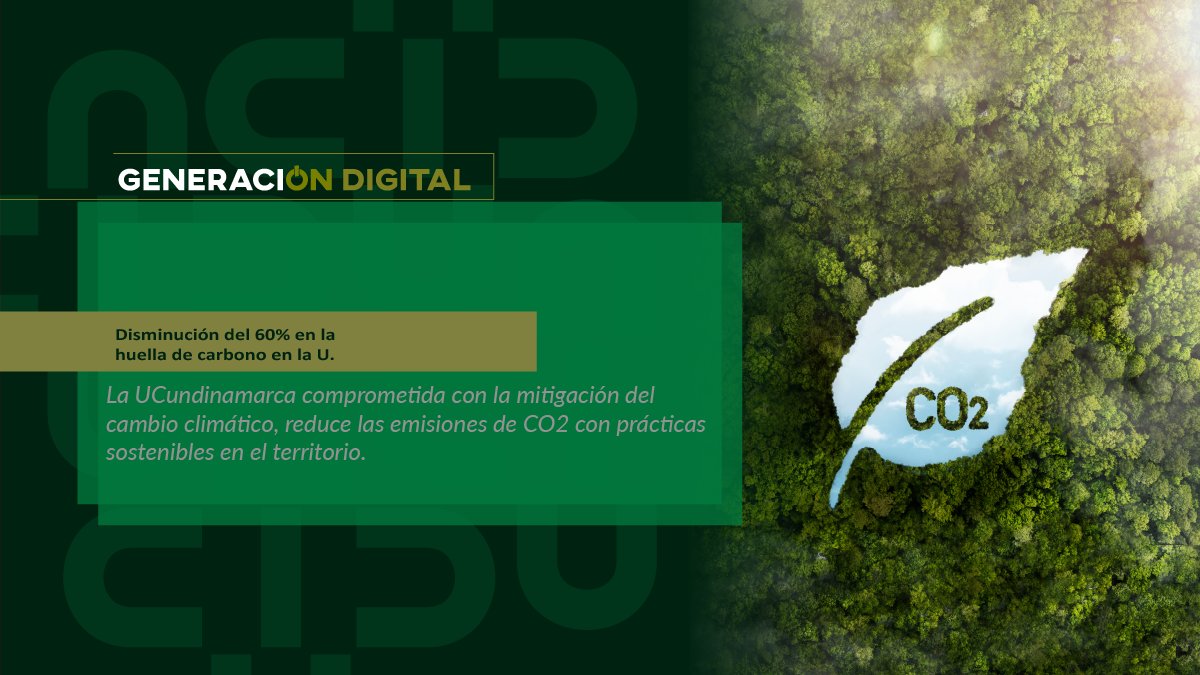
The implementation of good practices for the reduction of greenhouse gas emissions and the mitigation of negative environmental impacts has been a commitment of UCundinamarca since 2020, when the institutional Carbon Footprint began to be measured.
In line with the Sustainable Development Goals of the 2030 Agenda and in accordance with the dimensions of person, institution, nature, and society of the Transmodern Digital Educational Model (MEDIT), the University annually calculates its Carbon Footprint to assess the volume of greenhouse gases (GHG) generated by its daily activities. This measurement allows for the development of strategies to reduce emissions and thus contribute to the fight against climate change.
“The measurement at UCundinamarca began in 2020 and with teamwork from the University Social Responsibility (USR) area and the support of the Environmental Management System (EMS), as well as other institutional departments; through actions involving knowledge managers, opportunity creators and the administrative human team; year after year, the levels of CO2 emitted during the development of the Institution's processes have decreased,” said Ena Patricia Gil Bellido, Director of University Social Interaction, ISU.
According to the ISU Director, the annual process of data collection and analysis is carried out under international protocols and standards for the quantification and reporting of these emissions, which includes everything from data relating to the ways in which employees travel to their workplaces, to the water or energy consumption of each regional unit.
Why report this data?
In terms of social responsibility and sustainability, the report produced by the University becomes one of the most relevant actions, as it embodies the commitment to transparency in access to information and the fundamental desire to communicate to stakeholders the performance in environmental, as well as social, economic and ethical matters.
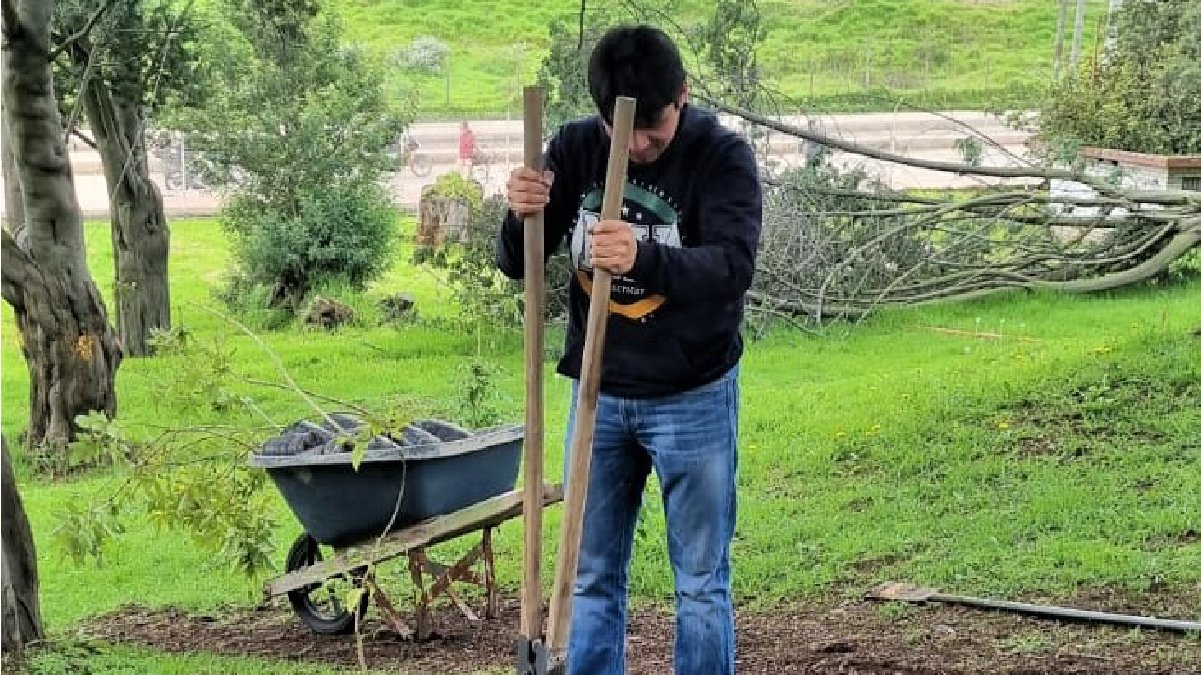
“At the Institution, strategies for waste disposal, reforestation days and environmental education days have been implemented; volunteer students have participated in these actions within the framework of the Nature Dimension of MEDIT,” Gil explained.
This calculation exercise has allowed us to obtain and renew, each year, the Carbon Footprint Measurement Seal, awarded by the Fenalco Solidario Corporation.
The results
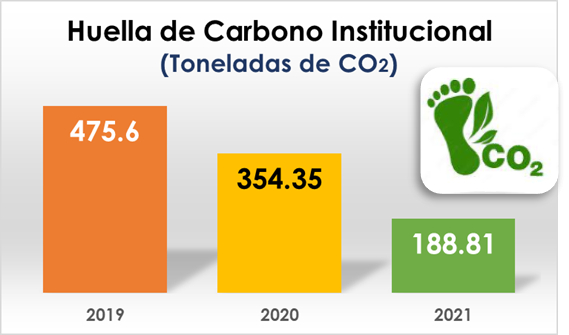
The results for 2019, 2020, and 2021 are shown below; the results of the 2022 measurement will be known in a few weeks, and the exercise for the 2023 period will begin:
| Year 2019
|
|
|---|---|
| Direct emissions: |
130.48 Tons – CO2
|
| Indirect emissions: |
345.13 Tons – CO2
|
| Total emissions |
475.60 Ton – CO2
|
| Year 2020
|
|
|---|---|
| Direct emissions: |
24.05 Tn – CO2
|
| Indirect emissions: |
330.39 Tn – CO2
|
| Total emissions |
354.35 Tn – CO2
|
| Year 2021
|
|
|---|---|
| Direct emissions: |
80.60 Tn – CO2
|
| Indirect emissions: |
108.2 Tn – CO2
|
| Total emissions |
188.81 Tn – CO2
|
*CO2: Carbon dioxide.
*Tn: Tons.
What is a carbon footprint?
The carbon footprint is known as the set of greenhouse gas emissions produced, directly or indirectly, by people, organizations, products, events or geographical regions, in terms of CO2 equivalent.
News
News
News
News