


Accreditation is an academic and voluntary process that seeks national recognition and promotes the improvement of a high-quality culture in institutions and academic programs, taking into account the legal nature, identity, mission, type, level of training, and methods of the programs and institutions; this is the official recognition of the high quality and impact of academic programs and institutions.
The National Accreditation Council (CNA) is the set of policies, strategies, processes, and organizations whose fundamental objective is to guarantee to society that the higher education institutions that are part of the system meet the highest quality requirements and fulfill their purposes and objectives. (Article 53 of Law 30 of 1992).
Accreditation takes place in five phases:
-Compliance with the guidelines required by the National Accreditation Council (CNA)
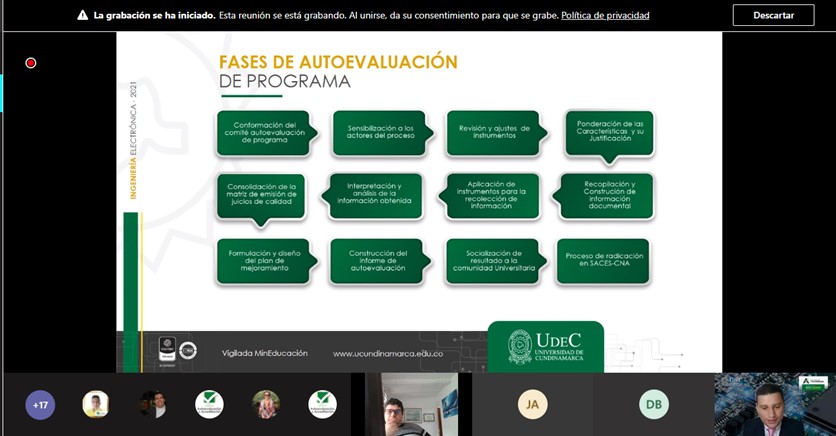
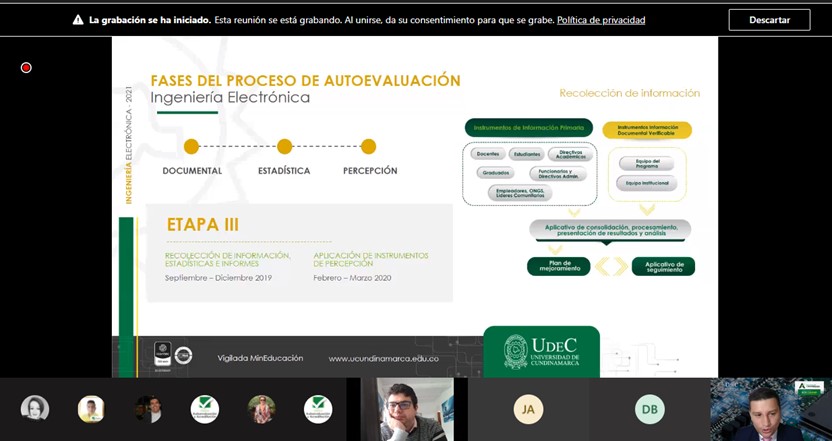
Self-assessment
-External evaluation by academic peers
-Final evaluation
-Public recognition of quality