University Welfare, through its welfare policy in its strategic action 2: “Student Retention, a strategic commitment of university welfare”, seeks to provide support to the opportunity manager from their entry into the institution until their graduation, through the achievement of the expected learning results and the attainment of the purposes of training and personal growth within the framework of training for life, democratic values, civility and freedom.



I am your virtual assistant, here to help you quickly and easily.
▲ Back to Top


Student retention, a strategic commitment to university well-being!

We seek to promote student retention and persistence through strategies such as:
To access these strategies, you can request them through our communication channel set up for you:
Email and Teams
This is a support service comprised of knowledge managers, opportunity managers, and an interdisciplinary team ready to guide and advise students in academic processes through formative experiences with the aim of facilitating the introduction and adaptation to university life, the creation of study habits, the acquisition of techniques that facilitate learning, decision-making, the formation of judgment, the development of soft and social skills, and integration with groups.
For UCundinamarca, it is important to support knowledge managers in the implementation of strategies that strengthen student persistence with a focus on academic and personal support directed at the opportunity manager, where dissemination and strengthening of the student regulations, identification of learning styles and support in issues such as absenteeism, low performance and health situations that contribute to collaborative learning and the creation of support networks among students.
This comprehensive strategy focuses on identifying academic, emotional, and psychosocial risk factors that could negatively impact the achievement of expected learning outcomes. Recognizing these early warning signs allows for timely intervention in cases of absence or difficulties in the student's learning process. Furthermore, ongoing monitoring and support facilitate the student's adaptability throughout their education, promoting the development of learning experiences that effectively address their academic progress. This strategy also guides students in overcoming various psychosocial, individual, institutional, and family challenges they may face, thus ensuring their well-being and academic success.
Experiences with study techniques and time management: Strategies aimed at strengthening soft skills in order to obtain better results in the training and learning process of opportunity managers, with the purpose of contributing to the improvement of academic performance and optimization of time use, through techniques such as:
- Time planning.
- Productivity capacity.
- Collaborative work.
- Critical reading, among others.
Socioeconomic support: These are strategies defined by University Welfare that seek to mitigate the needs of the student community that may put their permanence in the institution at risk; these strategies are made up of: Socioeconomic Programs and Tuition Exemption.
External agreements: These are programs of the Regional and National Government, the Department of Social Prosperity and Icetex, which seek to facilitate access, retention and graduation of the vulnerable population linked to higher education and the consolidation of life trajectories from dignity and the guarantee of rights.
What are tax exemptions and socio-economic programs?
These are strategies defined by University Welfare that seek to mitigate the needs of the student community that may put their continued enrollment at the institution at risk.
Based on economic resources:
It is granted to those people who, due to their socioeconomic condition, have a high vulnerability score. For this, an analysis is carried out on the platform based on different factors such as SISBEN, stratum, place of origin, priority population condition (displacement, victim, disability, among others).
Type A: Exemption from payment of the 100% registration fee of the semester.
Type B: Exemption from payment of the 50% of the tuition fee
For academic, scientific, sporting or cultural events:
The full 100% of the tuition fee is covered for those who have had an outstanding performance (1st, 2nd or 3rd place) representing the University.
By medal count:
100% of the registration fee is covered to those who have had an outstanding performance (gold, silver, bronze) representing the University.
These are support programs for the student population that seek to mitigate the risk of dropout among undergraduate students who have socioeconomic limitations and possess satisfactory academic performance.
What requirements must I meet to be able to apply for exemptions and programs?
Being a student undergraduate asset at the time of requesting the benefit.
Having obtained a semester average minimum of 3.5 in the completed semester.
Have approved all the subjects in the last completed semester.
No having received disciplinary sanction on behalf of the University.
Keep the characterization updated.
How can I apply for exemptions and socio-economic programs?
Through the institutional platform, The application called [name of application] will be enabled by clicking on the University Welfare icon. SIPSE (Information System for socio-economic programs) where you can register your data and upload the requested documentation.
How many types of exemptions and/or socioeconomic programs can I apply for?
Students can only apply to one program, so they are encouraged to study which program best meets their needs.
How can I find out if I was selected for the exemption or the program I applied for?
The results are published through the University's website, in the Regulations section – Rectoral Resolutions.
What should I do if I am selected to receive benefits from a socioeconomic program?
You must go to the University Welfare office at your campus to complete, sign and submit the MBUF013 commitment form, where you agree to comply with the MBUG002 socio-economic program regulations and subsequently begin to enjoy the benefit granted.
Learn about the socioeconomic programs offered at your campus here.
External agreements!

What is Renta Jóven?
The Renta Joven program is the evolution of Jóvenes en Acción and arises with the aim of contributing to the social and economic inclusion of young people and promoting the consolidation of life trajectories from dignity and the guarantee of rights.
This program promotes access to, retention in, and graduation from higher education and further training by providing conditional cash transfers and manages new opportunities for social mobility through employment, entrepreneurship, and postgraduate education.
What is a free tuition policy?
The Free Tuition Policy is the way in which the National Government assumes the payment of the net ordinary tuition of undergraduate students in any of the 64 Public Higher Education Institutions that have a budgetary link with the Ministry of National Education and that meet the access requirements indicated in article 9 of the Free Tuition Operational Regulation of 2023.
To be a high school graduate of vocational average (11th grade)
To have between 14 and 28 years old of age
Being enrolled in a supplementary training or higher education program at the following levels technician, technologist or university (undergraduate) in person, traditional distance learning, or virtual learning.
Not having a record in official higher education systems with university professional degrees
and/or postgraduate studies.
Be included in at least one of the population targeting bases of the Program that certify their situation of vulnerability or poverty:
- ICBF census lists.
- Indigenous census lists.
- Current Sisbén.
Not having an active membership in the Youth in Peace program or the strategy that replaces it.
Do you have any questions regarding the Renta Joven program?
Access requirements for the
Free Tuition Policy
1
Be enrolled in an academic program of undergraduate (professional, technological or university technician), in one of the public Higher Education Institutions listed in this regulation and registered in the SNIES.
2
Not having a university professional degree.
3
Demonstrate membership in one of the following groups:
- Socioeconomic stratum 1, 2, 3 or no stratum.
- Indigenous population.
- Roma population.
- Black, Afro-Colombian, Raizal and Palenquera communities.
- Population victimized by the conflict.
- Population with disabilities.
- Peasant communities.
- Population deprived of liberty.
- Groups A, B or C of the Sisbén IV, in any of its subgroups.
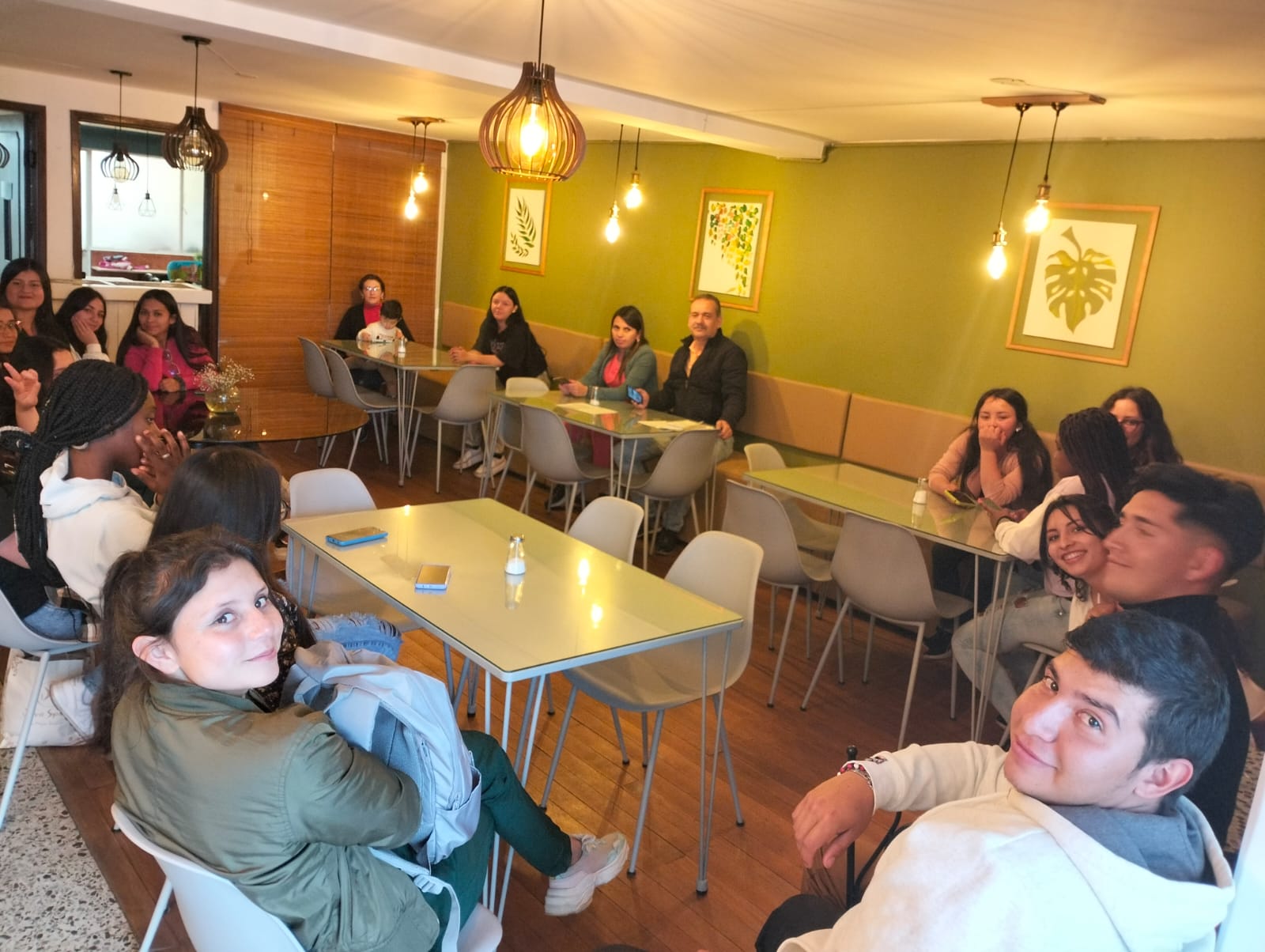
Our essence in every image
Discover how we experience learning, culture, and innovation in every corner of the university.


Contact
Academic Success
Academic Success
Academic Success
Academic Success