Institutional high-quality accreditation link stiky-sticky

▲ Back to Top

General information

Get to know the information that will help you take your next step.

User User User faces 1.5K

+1.500

Graduated students

Institution

University of Cundinamarca

Program Name

Electronic Engineering

Degree to be awarded

Electronics Engineer

Educational level

Undergraduate

Type of training

University Graduate

Methodology

In-person

Academic Credits

150

Estimated duration

9 semesters

Electronics
Campus icon

Location of development

Fusagasugá Campus:  SNIES 4086 – RC 05552 MEN 2016-03-29

High-Quality Accreditation Resolution 6420 from April 22, 2022

Electronics
REGISTER HERE

Learning path

View the subjects and phases that make up your undergraduate degree.


Engineering
Route 2

Semester 1

  • Assessment and Placement Test for Logical and Quantitative Reasoning
  • Linear algebra
  • Discrete mathematics
  • Engineering fundamentals
  • Fundamentals of electronics
  • Algorithmic thinking
  • Systems thinking and automation
  • Diagnostic and Leveling Communication and Critical Thinking

Engineering

Route 3

Semester 2

  • Logical and quantitative reasoning
  • Differential calculus
  • Statistics, probability and inference
  • Mechanical physics
  • Programming I
  • Diagnostic and leveling for 21st-century citizenship
  • Communication and Critical Reading I
  • Diagnostic and leveling foreign language

Engineering

Route 5

Semester 3

  • Integral calculus
  • Optics and wave physics
  • Programming II
  • 21st-century citizenship
  • Communication and Critical Reading II
  • Foreign Language I

Engineering

Route 1

Semester 4

  • Differential equations
  • Multivariable calculus
  • Physics: Electricity and Magnetism
  • DC Circuits
  • Digital Systems I
  • Foreign Language II

Engineering

Route 4

Semester 5

  • Diagnostic and leveling science, technology, and innovation
  • Systems analysis
  • Signals and systems
  • Electromagnetism
  • AC circuits
  • Analog Electronics I
  • Digital Systems II
  • Foreign Language III

Engineering

Electronics

Semester 6

  • Science, technology, and innovation I
  • Advanced Control Systems I
  • Instrumentation
  • Advanced Communication Systems
  • Analog Electronics II
  • 21st Century Chair
  • Entrepreneurship
  • Foreign Language IV

Engineering

cgca library

Semester 7

  • Science, Technology, and Innovation II
  • Advanced Intelligent Control II
  • Power electronics
  • Advanced Wireless Communication Networks
  • Antennas and transmission lines
  • Electrical machines
  • Embedded systems
  • Innovation

Engineering

Electronics

Semester 8

  • Science, Technology, and Innovation III
  • Advanced Industrial Automation III
  • Industrial electronics
  • Information Security Specialization III
  • Radio links
  • Project formulation and evaluation

Engineering

Girardot Cai Room

Semester 9

  • Graduation option
  • Advanced Machine Learning and Artificial Intelligence IV
  • Advanced Studies IV: Next-Generation Networks
  • Data networks
  • Intelligent systems

Specialization tracks

Specialization tracks allow you to tailor your education to specific areas of interest. Through specialized modules and course content, you can strengthen your skills, deepen your mastery of key topics in your discipline, and move forward with greater clarity in your academic and professional pursuits.

  • Specialization Track: Design, Instrumentation, and Control.
    Specialization: Specialization in Power Converter Control for Electric Mobility (Under construction).

  • Specialization Track: Telematics and Telecommunications.
    Specialization: Specialization in Network Infrastructure and Security.

Mission and Vision

Mission: To educate electronic engineers committed to the transformation and technological development of their social environment, through the application of knowledge in the areas of instrumentation, automation and control, telecommunications, and alternative energies, oriented to meet the needs of the region, with the ability to work in transdisciplinary teams and an entrepreneurial and innovative attitude that fosters the use of democratic values, civility, and freedom.


Vision: The Electronic Engineering program of the University of Cundinamarca will be recognized for its high quality in contributions to local, regional, and national development through the design, appropriation, use, and adaptation of technologies in the areas of instrumentation, automation and control, telecommunications, and alternative energies, acting as a transforming agent and generator of translocal knowledge with social, environmental, and human impact.
Professional Profile

Electronics 1

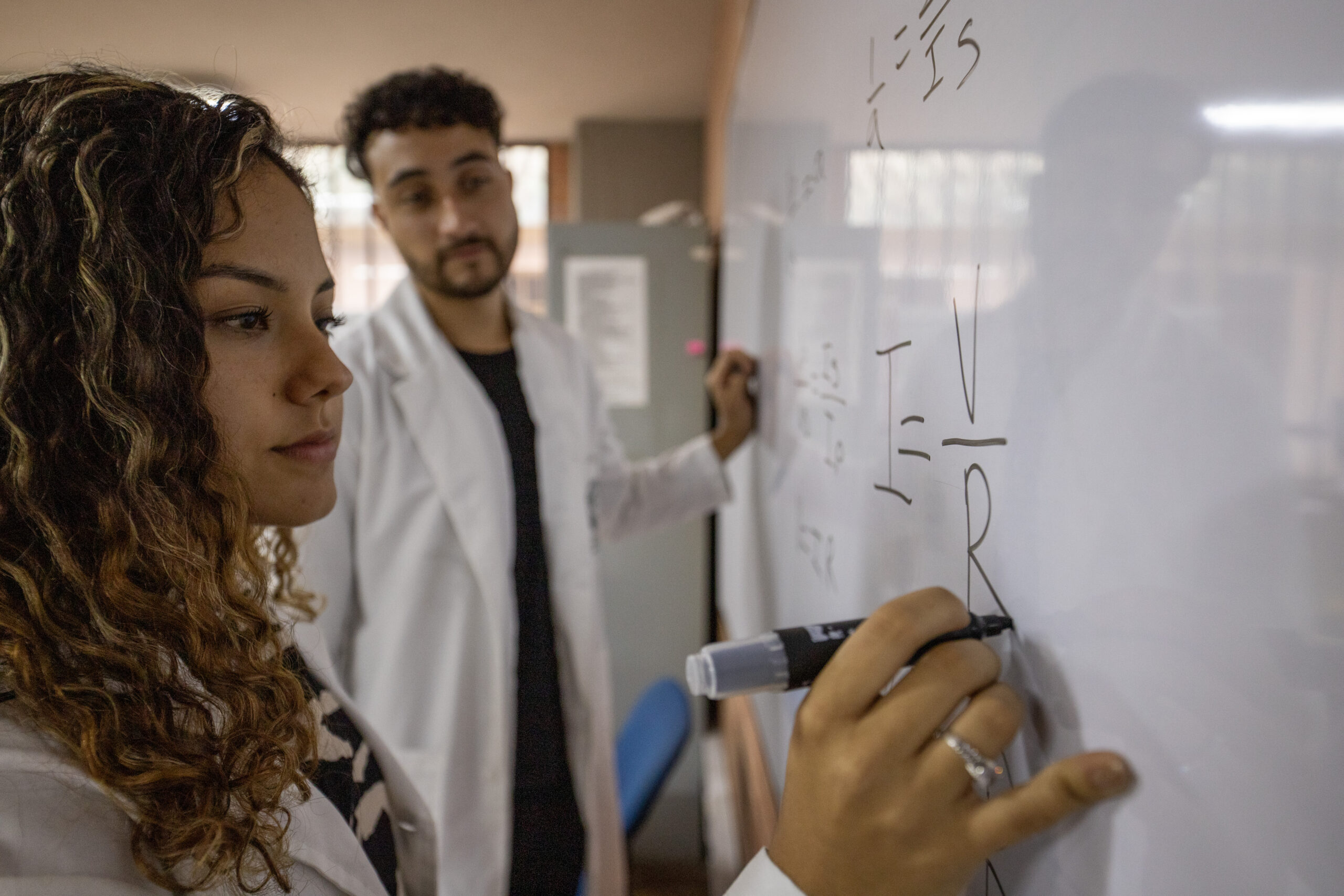
The Electronic Engineer from the University of Cundinamarca is characterized by being a professional with a critical vision to provide solutions to translocal technological problems, transforming social reality through:


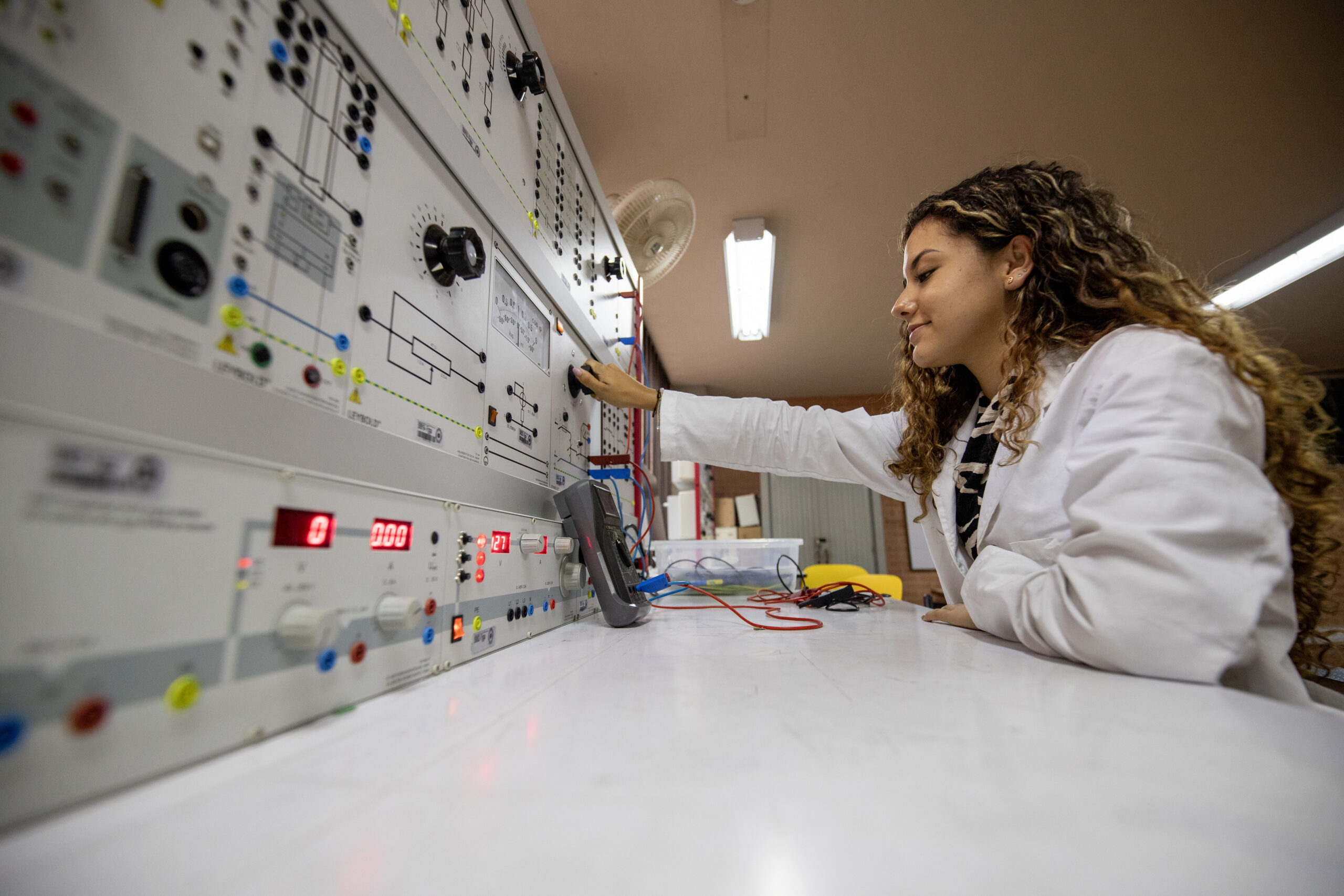
• Manage electronic systems for the automation and control of technological processes in the agro-industrial, manufacturing, and energy sectors.

• Provide technological solutions based on knowledge in the fields of instrumentation, automation and control, telecommunications, and alternative energies aimed at sustainable development from a translocal perspective.

• Develop science, technology, and innovation projects for the transformation of

environment through the modernization of production processes with an ethical, social, and environmental responsibility.

• Lead cross-disciplinary teams from the perspective of one's profession for the development of innovative value propositions.
Occupational Profile

Electronics 2

Based on their level of training, an Electronic Engineer from the University of Cundinamarca will be able to work professionally in:


  • Development of solutions in industrial environments through automation and technological process control.
  • Elaboration of studies and participation in technological projects of a
  • transdisciplinary.
  • Research centers as a researcher in science, technology, and innovation projects.
  • Consulting services to organizations in the agro-industrial, manufacturing, and energy sectors.
  • Generation of innovative technology-based companies.

Training Purpose

The Electronic Engineering program has the following educational purposes:
 

  • Train engineers with scientific and technological knowledge that allows them to adapt new technologies in the fields of instrumentation, automation and control, telecommunications, and alternative energies that reduce the digital divide.
  • Manage Science, Technology, and Innovation projects related to the field of Engineering that allow the student to address needs in society through transdisciplinary work.
  • Establish alliances with organizations to promote the transfer of technologies, technological services, and social outreach based on innovative value propositions.
  • Fostering in students critical thinking, social awareness, environmental consciousness, and life-skills training.

Professional Teacher Profiles

Andres Guerrero

Andrés Felipe Guerrero Guerrero

Electronic Engineer, National University of Colombia, Colombia.
Arley Fernando Fernandez Benavides

Arley Fernando Fernández Benavides

Mechatronic Engineer, Nueva Granada Military University
Alejandro Patio Carrillo

Alejandro Patiño Carrillo

Electronic Engineer. District University Francisco José de Caldas
Teacher Cesar Casas Antiguo

Cesar Augusto Casas Diaz

Electronics Engineer. University of Cundinamarca
Edwin Palacios Yepes

Edwin Palacios Yepes

Electronic and Telecommunications Engineer, Catholic University of Colombia
Edgar Creole2

Edgar Hernando Criollo Velásquez

Telematics Engineer, Catholic University of Manizales. Master in Electronic Engineering, Pontifical Xavierian University, Bogotá Campus.
Faider Humberto Barrero Sánchez

Faider Humberto Barrero Sánchez

Electronic Engineer, University of Ibagué Master in Industrial Control Engineering, University of Ibagué
Fernando Diaz1

Fernando Augusto Díaz Ortiz

Electronic Engineer, Distrital Francisco José de Caldas University. Master in Electronic Engineering, Pontificia Universidad Javeriana. Master in Information and Communications Sciences, Distrital Francisco José de Caldas University
Ismael e. Roa Laguado

Ismael E. Roa Laguado

Electronic Engineer, Fundación Los Libertadores University. Specialist in Bioengineering, Distrital University “Francisco José de Caldas”
Jorge Luis Leyva

Jorge Luis Leyva Zapata

Electronic and Telecommunications Engineer, Universidad Autónoma del Caribe. Specialization in Telecommunications, Universidad Tecnológica de Bolívar. Master's in Cybersecurity (Candidate), Universidad UNIR
Pedro Luis Cifuentes Guerrero

Pedro Luis Cifuentes Guerrero

Electronic Engineer, University of Cundinamarca. Specialist in Software Engineering, Incca University of Colombia. Master in Software Architecture, Distance University of Madrid
Uriel Augusto Galvis Mora

Uriel Augusto Galvis Mora

Electronic Engineer. University of Cundinamarca. Specialist in Educational Computing Administration. University of Santander. Master's in Educational Technology Management. University of Santander
Lina

Lina Maria Torres quinones

Electronic Engineer, Francisco de Paula Santander University. Master in Industrial Automation and Control, Metropolitan Technological Institute of Medellín ITM
Monica Espinosa Buitrago

Mónica Espinosa Buitrago

Electronic Engineer, Antonio Nariño University. Master in Information and Communications Sciences, Universidad Distrital Francisco José de Caldas
Louis Philippe Meziat

Louis Philippe Meziat Castro

Electronic engineering with a specialization in organizational development and educational project management. Master's candidate in Innovation and Design, Project Management and Direction.
Cesar Ramirez

Cesar Augusto Ramirez Sanchez

National University of Colombia. Specialization. Environmental Education and Community Development. University of Cundinamarca
Neil Jimenez

Neil Andrés Jiménez Pinzón

Undergraduate: Electronic Engineer, National University of Colombia, Manizales campus. Postgraduate: Master in Electronics and Telecommunications, University of Cauca
Diana Vega profile picture

Diana Carolina Vega Ospina

Electrical Engineer, Escuela Colombiana de Ingeniería “Julio Garavito”. Master's Degree in Electrical Engineering, Escuela Colombiana de Ingeniería “Julio Garavito”
Edwin Escobar's profile picture

Edwin Sneider Escobar Ortiz

Electronic Engineer, Universidad de Cundinamarca. Specialist in Applied Statistics, Fundación Universitaria Los Libertadores. Master in Technology Education, Universidad Distrital Francisco José de Caldas.
Edson David Bautista Ramírez

Edson David Bautista Ramírez

Electronic Engineering, Escuela Colombiana de Ingeniería Julio Garavito. Specialization: Telecommunications Project Management, Universidad del Rosario. Master's Degree: Renewable Energies and Energy Sustainability, University of Barcelona.
Eduardo Corts Cruz

Eduardo Cortés Cruz

Electromechanical Engineer - Pedagogical and Technological University of Colombia. Master in Mechanical Engineering - University of the Andes. Specialization in Pedagogy and University Teaching
Nstor German Bolivar Pulgar photo

Néstor Germán Bolívar Pulgarín

BACHELOR OF SCIENCE IN ELECTRONICS. MASTER IN TELECOMMUNICATIONS ENGINEERING.

Historical Overview of the Program


December 19 December 30 January 18 February 27
1992 1992 1996 2009
By means of Ordinance 045 of 1992, the University Technical Institute of Cundinamarca was created, with its main campus in Fusagasugá. By Resolution 19530 of 1992, the National Ministry grants the Instituto Técnico Universitario de Cundinamarca recognition as the University of Cundinamarca. The program was created by the Higher Council of the University of Cundinamarca through Agreement 003 and began academic activities at the Fusagasugá Headquarters. Ministry of National Education grants the first Qualified Registry to the program through Resolution 986 of 2009.
March 29 December 18 May 24 February 14
2016 2018 2019 2020
Through Resolution 05552 of the Ministry of National Education (M.E.N.), the Qualified Registry of the Electronic Engineering program is renewed for a period of 7 years. Approval of initial accreditation conditions before the National Accreditation Council – CNA. Initiate the self-assessment process, factor weighting, and evidence gathering for accreditation purposes. Strengthening of research through research projects with Minciencias.
August 19 April 22 (No specific date) April 24
2021 2022 2023 2024
Specialized laboratory update. The Ministry of National Education, through Resolution 006420, grants High Quality Accreditation to the academic program Electronic Engineering. The program's curriculum is redefined within the framework of the Transmodern Digital Educational Model, MEDIT, and updated to reflect international trends. Awards are given to three professors for the impact of their research projects.

Program Objectives


  • To train comprehensive professionals in the field of Electronic Engineering to contribute to the development of the department and the nation, through the appropriation, use and adaptation of technologies in the field of telecommunications, control, alternative energies, among others.
  • Formulate, manage and develop research projects related to the field of Engineering that contribute to solving problems of the department and the nation.
  • Establish strategic alliances with organizations for the development of academic processes, research projects, technology transfer and technological services, among others.


Research Groups


The Electronic Engineering program has two research groups, GITEINCO and GIGATT, categorized as C by Colciencias, where research processes are developed within the program's research lines:


  • Telematics and telecommunications.
  • Design, instrumentation and control.
  • Software, emerging systems and new technologies.
  • Energy transformation: alternative energies.

Related Documents

Team

Silhouette of a Man

Javier Hernando Gracia Gil

Dean
Silhouette of a Man

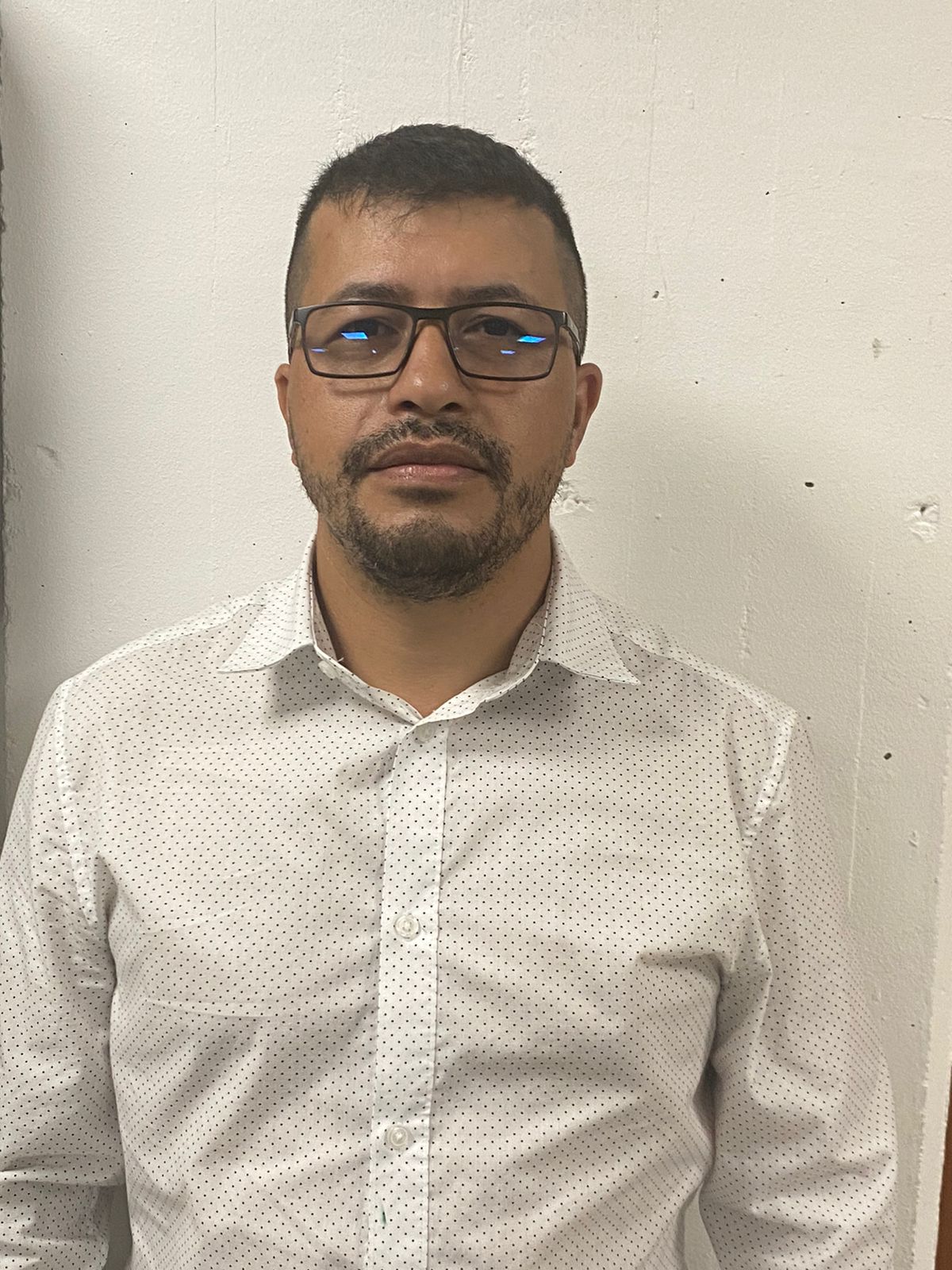
Faider Humberto Barrero Sánchez

Program Coordinator

Contact

School of Engineering

Fusagasugá Branch
Block F – 1st Floor
(+57 1) 828 1483 Ext. 144

School of Engineering

School of Engineering

School of Engineering

School of Engineering